Odor & removal
Dead Rodent Removal San Luis Obispo, CA
Dead rodent removal San Luis Obispo starts with finding what died where. That sweet, pungent decay smell in a wall void, attic, or crawl space almost always means a rodent died out of reach. We trace the odor to its source, remove it safely, disinfect the area, and seal the entry points so it doesn't happen again.
- Inspection-first — we find every entry point
- Exclusion-first — sealed with steel, not poison
- Local — we know SLO's roof-rat pressure
Removal rules
How it works
Dead Rodent Removal San Luis Obispo: How It Works
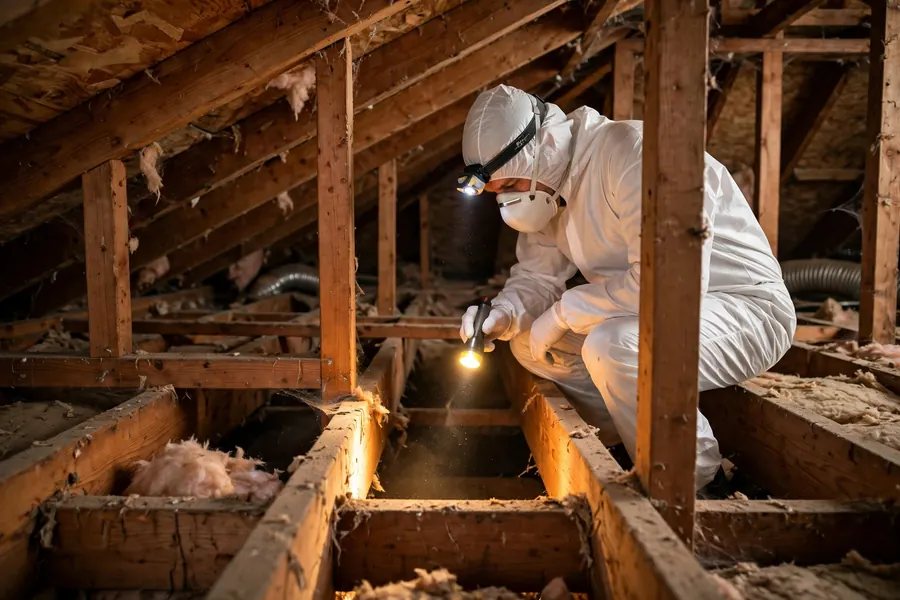
Direct answer: we trace the odor to its source, open the smallest access that reaches it, remove the carcass with gloves, disinfect the area, and then find and seal how it got in. The last step is the one that matters most — without it, you're scheduling the sequel. Removal is step one — our rodent control in San Luis Obispo always follows with sealing, so it doesn't happen again.
Wall voids, attics, crawl spaces, and behind appliances are the usual spots. If you can't reach it or the odor persists after removal, that's a pro job: left carcasses attract flies and secondary infestations, and cutting blindly into drywall makes things worse. Removal visits often uncover droppings too — our hantavirus cleanup protocol covers the safe way to handle those.
Locate
Odor tracing narrows the source to a wall void, attic bay, or crawl-space section — no random demolition.
Remove safely
Gloves, sealed bag, proper disposal — never bare hands, with thorough washing after.
Disinfect & seal
The area gets disinfected, and the entry points get sealed so it doesn't repeat.
Root cause
Why Poisoned Rats Die in Walls
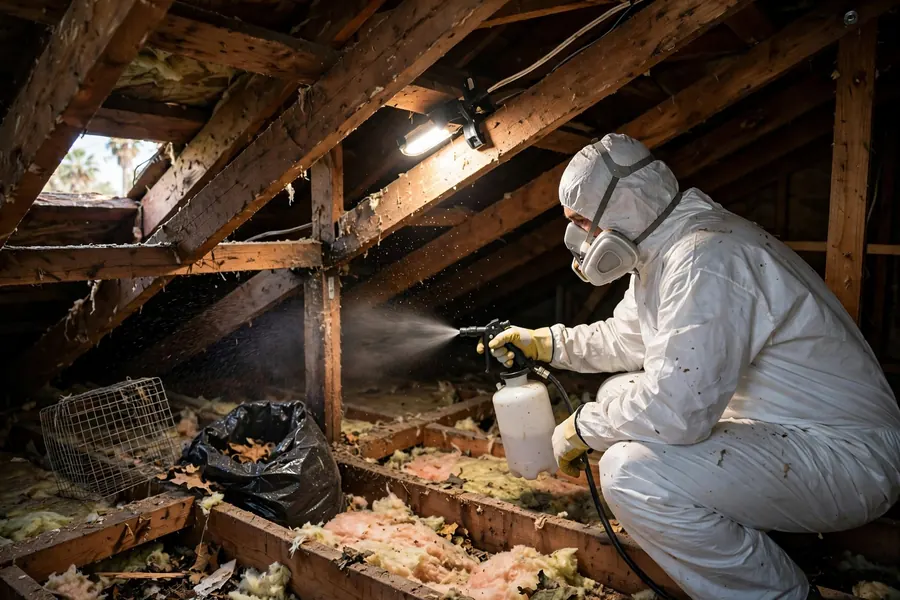
This is the dirty secret of poison-first pest control: a poisoned rodent doesn't die where it ate the bait. It retreats into a wall void or ceiling, dies there, and you live with the smell for weeks while flies find it. The nests they retreat to are usually in those same wall voids and ceilings — our rat nest vs mouse nest guide explains where each species nests, so you know where to look when the smell starts.
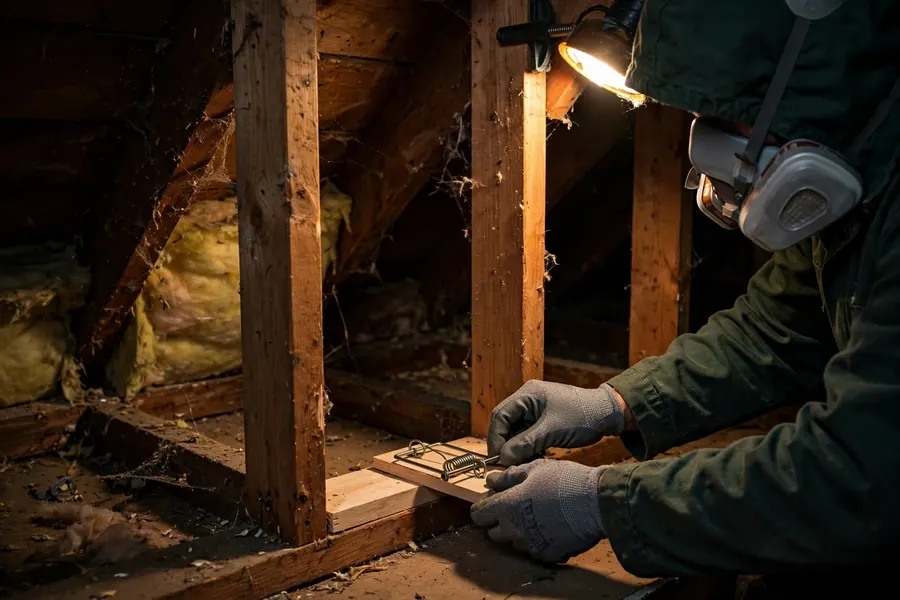
That's exactly why UC IPM prefers trapping indoors — the carcass gets disposed of before odor sets in. And it's why baiting indoors without exclusion work first actually raises the odds of rats dying inside your walls. The smell in your hallway is usually the bill coming due for a shortcut.
The science
The Smell Timeline: How Long a Dead Rodent Stinks
Direct answer: a dead mouse in a wall void smells for roughly one to two weeks; a dead rat, two to four. That is the honest range — and three things stretch it longer: heat, size, and how sealed the space is.
Decay runs in stages. Days one and two are quiet — the smell has not started. Days three through seven are the worst: bacterial bloat peaks, odor is strongest, and flies find the carcass — you will see them gathering at a vent or window near the source. By weeks two and three the smell fades as tissue dries; what is left is dry remains and, sometimes, a stained patch of drywall that keeps a faint odor for months.
Heat is the accelerator. A rat that dies in a SLO attic in August can go from fresh to peak odor in 48 hours; the same rat in a cool crawl space in January takes twice as long. Wall voids are the worst location of all — no airflow, so every molecule of odor has one way out: through your drywall and into the room.
Where they die — and how we reach them
| Location | Telltale sign | How we reach it |
|---|---|---|
| Wall void | Localized stench at one wall section; flies at nearby window | Small drywall cutout behind furniture line, patched after |
| Attic bay | Smell strongest at ceiling; staining on drywall below | Direct access — lift insulation, remove, disinfect |
| Crawl space | Odor rising through floor vents; musty-sweet mix | Crawl entry — suited up, carcass bagged on site |
| Under/behind appliances | Smell concentrated in kitchen or laundry | Pull appliance, remove, disinfect the floor beneath |
After removal, the area gets an enzymatic disinfectant — not just a spray-and-pray. Enzymes break down the odor-causing compounds instead of masking them. If drywall absorbed fluids, that section gets cut out and replaced; no cleaner fixes soaked gypsum. Then we find the entry point, because a wall void that hosted one dead rat is an open invitation for the next live one.
After removal
After Removal: Seal It Up
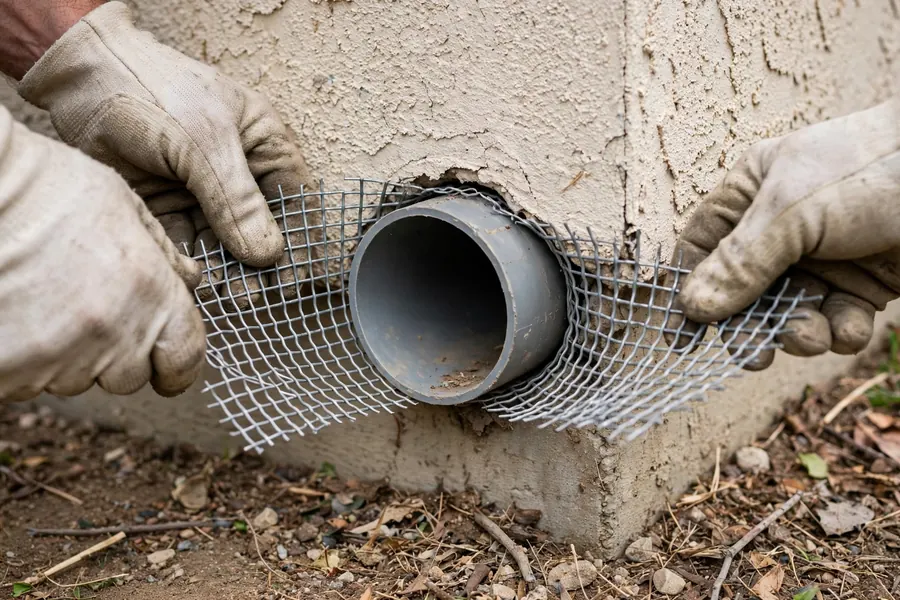
Every dead-rodent job ends with the same question: how did it get in? We answer it with a full entry-point inspection and seal every opening over 1/4 inch with materials rats can't chew through — galvanized mesh, steel wool, sheet metal, door sweeps.
It's the exclusion follow-up that turns a removal into a solution. Otherwise the next rat takes the same route, nests in the same void, and you're calling about the same smell next season.
Rodent Exclusion
The sealing work that keeps the next one out — and out of your walls.
Rodent Exclusion San Luis ObispoAttic Cleanup
Disinfection and insulation restoration for contaminated attic spaces.
Attic Cleanup San Luis ObispoProfessional Extermination
The full pro process: inspection, trapping, exclusion, monitoring.
Professional Extermination San Luis ObispoGood to know
Dead Rodent Questions, Answered
Odor, removal, and how to keep it from happening again.
Because something probably did. Poisoned rodents die in wall voids and ceilings — it's the classic dead-rodent sign: an extremely pungent decay odor in an enclosed area. It's also exactly why UC IPM and pros prefer trapping indoors, so carcasses get disposed of before odor sets in.
Remove it as soon as possible: disposable gloves, never bare hands — bury it or seal it in a plastic bag in the trash, then wash thoroughly. If you can't reach it or the odor persists, call a pro; left carcasses attract flies and secondary infestations. And note: baiting indoors without exclusion first raises the odds of rats dying inside.
UC IPM is direct: snap traps are the safest, most effective, and most economical way to trap rats, and trapping is preferred indoors because poisoned rodents die in walls and ceilings. Poison in tamper-resistant stations has its place outdoors — always after exclusion, never instead of it.
Very likely roof rats — they favor attics, wall voids, and false ceilings and are most active after dark. If the scratching recently stopped and a bad odor started, a rodent may have died up there, and it's time for a removal visit.
In warm weather, yes — a dead rat in a wall void only gets worse, and flies follow within a day or two. Call as soon as you notice it. We treat these as urgent: locate, remove, sanitize the area, then find the entry point so it doesn’t happen again.
A mouse in a wall void: roughly one to two weeks. A rat: two to four. Heat stretches the timeline — a summer attic death peaks in days — while a sealed wall void with no airflow holds odor longest. After we remove the carcass, enzymatic disinfectant breaks down what is left instead of masking it.
Eventually, yes — over weeks. But the flies, the secondary pests the carcass attracts, and the stained drywall do not resolve themselves. And the entry point that let the rodent in is still open, which is how you end up calling about the same smell next season.
That Smell Isn't Going Away on Its Own.
We locate it, remove it safely, disinfect, and seal the entries. Call now for dead rodent removal in SLO. That’s the difference — no poison reliance, no guesswork, just results.
(805) 475-0516