Stay rodent-free
Rodent Control Program San Luis Obispo, CA
A rodent control program San Luis Obispo is ongoing prevention, not a one-time visit: scheduled inspections, monitoring, maintained exclusion, and sanitation guidance. Roof rats stay active year-round in California, and the indoor surge hits every October through January — the homes that stay rodent-free are the ones on a program.
- Inspection-first — we find every entry point
- Exclusion-first — sealed with steel, not poison
- Local — we know SLO's roof-rat pressure
Program at a glance
What's included
Rodent Control Program San Luis Obispo: What Ours Covers
Every program has the same three elements, in the same order: sanitation (remove the food, water, and shelter), structural exclusion (seal the entries), and population control (trapping where needed) — plus monitoring on a schedule so nothing slips.
The order matters. Eliminate the attractants first, then trap. Baiting or trapping while the garbage is still open and the vents are still unscreened is just feeding the next generation.
Scheduled inspections
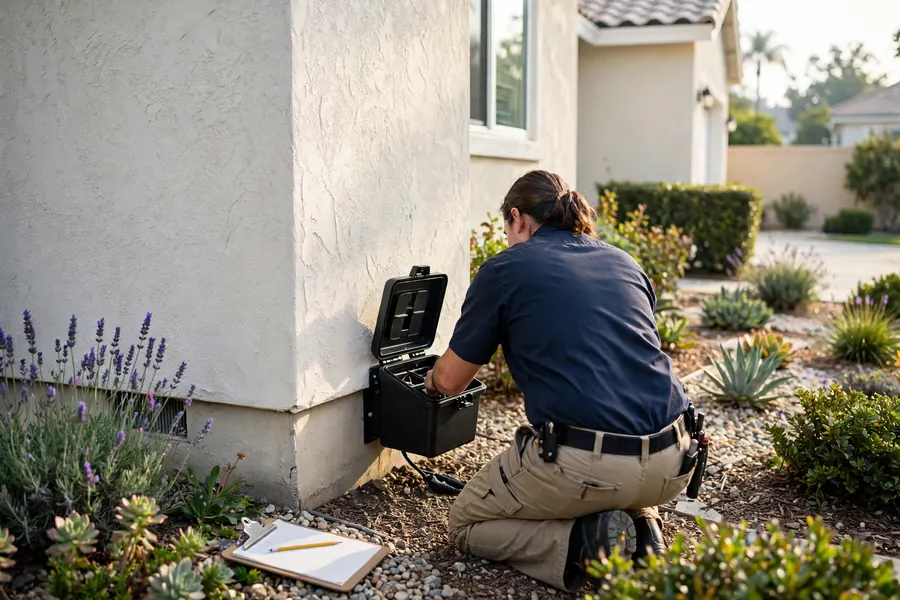
Regular interior and exterior checks — entry points, attic activity, landscaping changes — catching problems while they're small.
Maintained exclusion
Sealed entries stay sealed only if someone checks them. We re-inspect screens, sweeps, and vent covers before each rodent season.
Monitoring & response
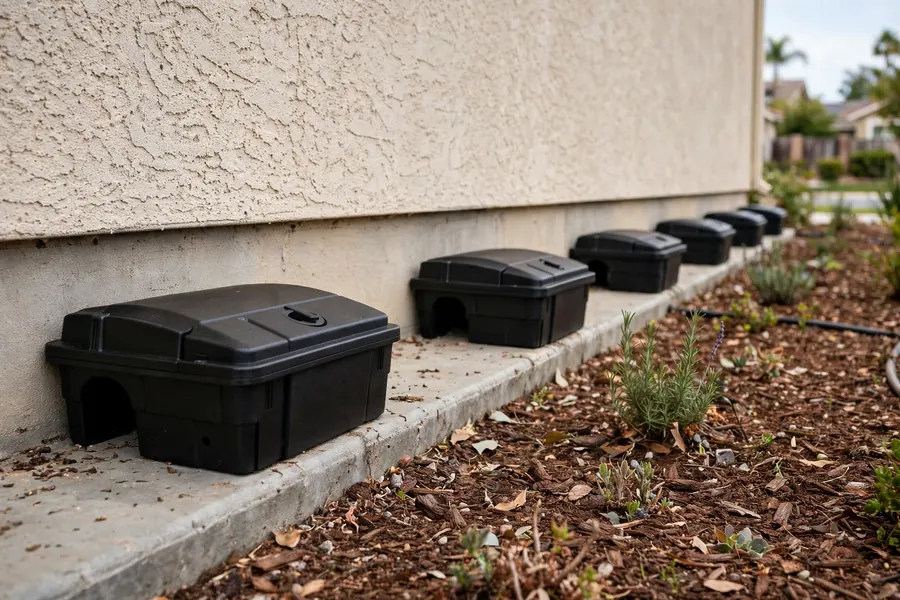
Tamper-resistant monitoring outdoors and a clear response plan, so a new sighting gets handled fast — not next quarter.
SLO timing
The SLO Seasonal Calendar
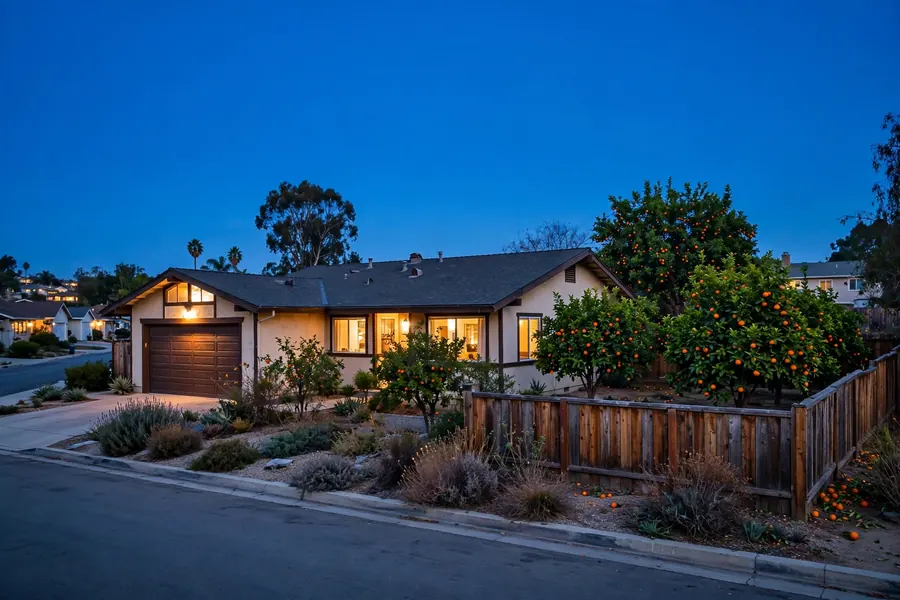
Nobody local publishes one, so here it is: late summer and fall is when roof-rat activity is most visible — citrus damage, attic noise, rats on fence tops at dusk. October through January is the indoor surge, when the first rains and cooling nights drive them inside. Spring is maintenance season: trim, seal, and clean before the next cycle.
A program times the work to the calendar — pre-fall exclusion checks in September, monitoring through the surge months, sanitation resets in spring. That's the rhythm that keeps a SLO home quiet year after year.
Why it works
Why One-Time Visits Don't Hold
One-time trapping removes the current population. It does nothing about the gap under the garage door, the unscreened attic vent, or the ivy against the wall — and UC IPM is blunt about it: sanitation must be ongoing, or the rats return. That's why ongoing rodent control San Luis Obispo beats one-off visits every time.
This is especially true around Cal Poly, where student rentals turn over constantly and absentee owners can't watch every property. A program gives landlords and property managers the one thing turnover destroys: continuity.
Professional Extermination
The intensive first phase — inspection, trapping, and initial exclusion.
Professional Extermination San Luis ObispoRodent Exclusion
The permanent sealing work every program is built on.
Rodent Exclusion San Luis ObispoResidential Rodent Control
Whole-home protection for SLO homeowners, program or one-time.
Residential Rodent Control San Luis ObispoThe method
What a Real IPM Program Looks Like, Visit by Visit
Direct answer: inspection first, then trap, then exclude, then monitor — in that order, every time. UC IPM is blunt about the sequence: sealing entry points is the foundation, and trapping without sealing is futile. Here's what each visit actually includes.
| Visit | Timing | What we do | Why it matters |
|---|---|---|---|
| 1 — Inspection & setup | Day 1 | Full exterior and attic inspection, entry-point mapping, 10+ snap traps placed on activity areas | You can't fix what you haven't found; traps go where the evidence is |
| 2 — Follow-up | Days 3–7 | Check traps, remove captures, relocate underperforming traps, begin exclusion on confirmed entries | Most captures happen in the first nights; dead traps get moved, not left |
| 3 — Exclusion push | Days 7–14 | Seal entries with copper mesh, 1/4-inch hardware cloth, brush sweeps; verify with the pencil test | Sealing while trapping means no new arrivals replace the trapped ones |
| 4 — Verification | Days 14–30 | Re-inspect all seals, keep traps until activity stops completely, confirm with fresh-dropping check | Silence is the metric — traps stay until there's zero sign of activity |
| Ongoing — Monitoring | Quarterly | Exterior walk-around, seal integrity check, vegetation and entry re-check, seasonal prep | New gaps open every year — monitoring catches them before rodents do |
Why this order
Seal first, then trap — but trap the current population before the last seal goes in, or you've locked rodents inside. The industry rule is simple: "If openings remain, trapping is futile." The program sequences it so neither step undermines the other. Exclusion is the foundation of the program — and the most expensive part of it, so our rodent exclusion cost guide breaks down what drives the price and what a proper quote should include.
Why 2–4 follow-ups
California trapping programs typically include 2–4 follow-up visits over about 30 days. That's not upselling — it's biology. Roof rats are neophobic (they fear new objects), so traps need pre-baiting and repositioning before the full population is caught.
Why quarterly monitoring
SLO's first fall rains hit around October–November and push rodents indoors every year. A quarterly visit before invasion season re-checks seals, trims vegetation ladders, and confirms the exclusion still holds — prevention timed to the calendar, not to a crisis.
Good to know
Program Questions, Answered
How ongoing rodent protection actually works in SLO.
Three elements in order: sanitation (remove food, water, and shelter), structural exclusion (seal the entries), and population control (trapping where needed) — plus ongoing monitoring. Attractants get eliminated first, then trapping, then scheduled inspections and follow-ups keep it that way.
One-time trapping removes the current population, but UC IPM warns that sanitation must be ongoing — without maintained food, water, and shelter control plus sealed entries, rats come back. An ongoing program of inspections, monitoring, and maintained exclusion is the standard for staying rodent-free.
Only if the reasons they came stay in place — open entries, food, and shelter. That's the whole argument for a program: trapping without exclusion and sanitation is temporary, but a sealed, monitored home stays quiet.
It varies by rodent type and infestation extent; a pro evaluates the property and designs a plan around removal plus exclusion. Exclusion costs more than trapping alone because it's labor-intensive permanent structural work — but it's what prevents reinfestation, which is what a program is really selling.
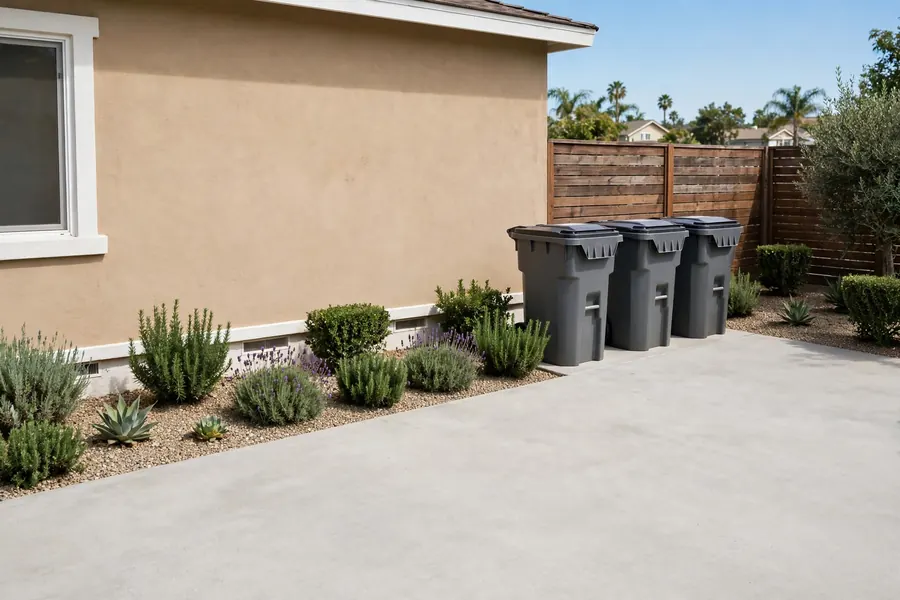
Food, water, and shelter: overnight pet food, birdseed, fallen or unharvested fruit, open garbage, dense ivy against the house, cluttered garages, woodpiles, and compost. A program starts by walking your property and removing these one by one.
Put the Rodents on a Schedule — Yours.
Inspections, maintained exclusion, and monitoring through every season. Call now to talk about a program for your SLO home or rental. Call the crew today — one thorough visit is all it usually takes.
(805) 475-0516