Mice control
Mice Exterminator San Luis Obispo, CA
A mice exterminator San Luis Obispo homeowners call when house mice slip through 1/4-inch gaps and multiply fast — we remove them with targeted trapping and seal every entry so they can't come back. No poison reliance, no guesswork. That's the SLO rodent control standard: inspection first, poison-free trapping, sealed entries.
- Inspection-first — we find every entry point
- Exclusion-first — sealed with steel, not poison
- Local — we know SLO's roof-rat pressure
Don't wait on mice
Mice Exterminator San Luis Obispo: When to Call
Call a mice exterminator in San Luis Obispo as soon as you notice droppings, a musky odor, or scratching in walls — mice you see in the open mean more are hiding, and a 1/4-inch gap is all they need to keep coming. Early trapping plus exclusion is faster and cheaper than waiting for a full infestation.
Droppings in the kitchen
House mouse droppings are about 1/4-inch, rod-shaped, and show up in cabinets, pantries, and along baseboards. Fresh droppings near food mean active traffic — not an old problem.
Musky odor
That stale, musky smell in the pantry or under the sink is a classic house mouse signature. Odor plus droppings means they've settled in, not just passed through. Our house mouse control guide covers the full indoor-mouse playbook.
Noises at night
Light scratching or scampering inside walls and ceilings after dark. Mice are nocturnal and secretive — if you're hearing them, the population is already established.
Know what you're dealing with
Mice or Rats? How to Tell in Your SLO Home
It matters because trap size, placement, and strategy all change with the species. Here's how to read the evidence like a pro. Our rat nest vs mouse nest guide walks through the same evidence step by step, so you can confirm the species before setting a single trap.
House mouse signs
About half an ounce and 5–7 inches including a nearly hairless tail, with relatively large ears and light brownish-gray fur. Droppings are 1/4-inch rods; gnaw marks are fine and scratchy (about 1/12 inch); the giveaway smell is musky. They slip through 1/4-inch openings, fit under 1/4-inch-tall gaps, climb any rough vertical surface, and jump 12 inches.
Rat signs
Much larger animals with thicker droppings — roof rat droppings run about 1/2 inch and spindle-shaped, Norway rat about 3/4 inch and capsule-shaped. Gnaw marks show clear 1/6-inch tooth marks. Scratching in the attic at night points to roof rats; burrows along the foundation point to Norway rats. See our rat control page if the evidence points that way.
Where they hide
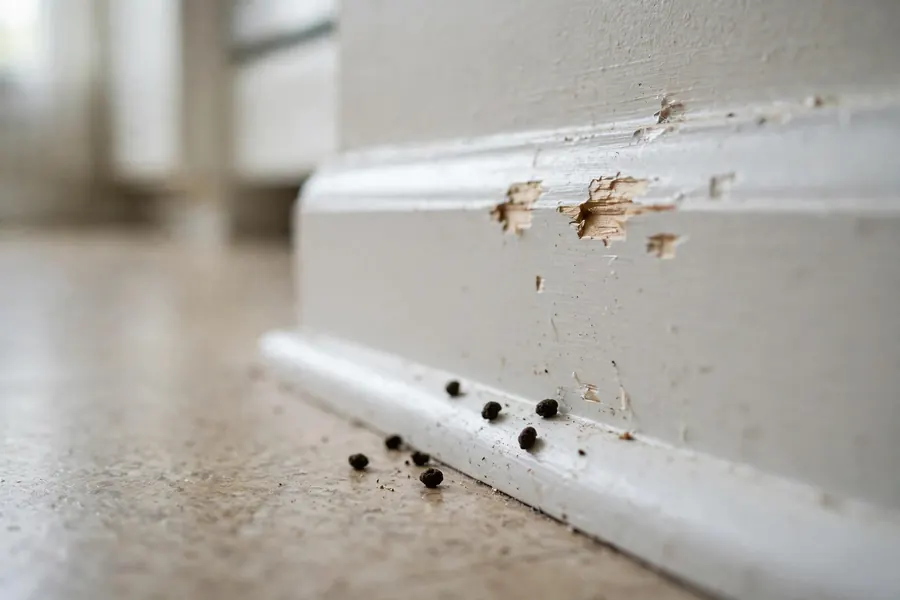
Mice in the Attic and Walls: What the Sounds Mean
Mice reach attics through wall voids, pipe chases, and gaps around wiring — then nest in insulation and travel the same routes nightly. Light, quick scratching high in walls or above ceilings is the signature; heavier thumping or dragging usually means rats.
Inside, mice stick to kitchens, pantries, garages, and anywhere food is stored — traveling along walls and behind appliances rather than crossing open rooms. In SLO's student rentals around Cal Poly, cluttered garages and inconsistent trash routines turn group houses into ideal mouse habitat. Sealing the routes matters more than the room: until wall voids and pipe chases are closed, attic mice just relocate instead of leaving.
How we do it

How We Get Rid of House Mice
UC IPM's playbook, applied to your house: the right trap size, placed where mice actually travel, in numbers most people underestimate — then sealed entries so it sticks.
-
Inspect
We confirm it's mice (not rats), find the droppings trails, and map how they're getting in — because a mouse needs only a 1/4-inch opening, and most homes have several. Mice near open space or trails may be a different species — see our deer mouse control guide for the wildland-edge mouse.
-
Trap correctly
Snap traps no more than 10 feet apart in active areas, tight to walls, in dark corners and behind objects — often in pairs an inch or two apart. Mice are curious but cautious around new objects, so placement beats bait.
-
Exclude
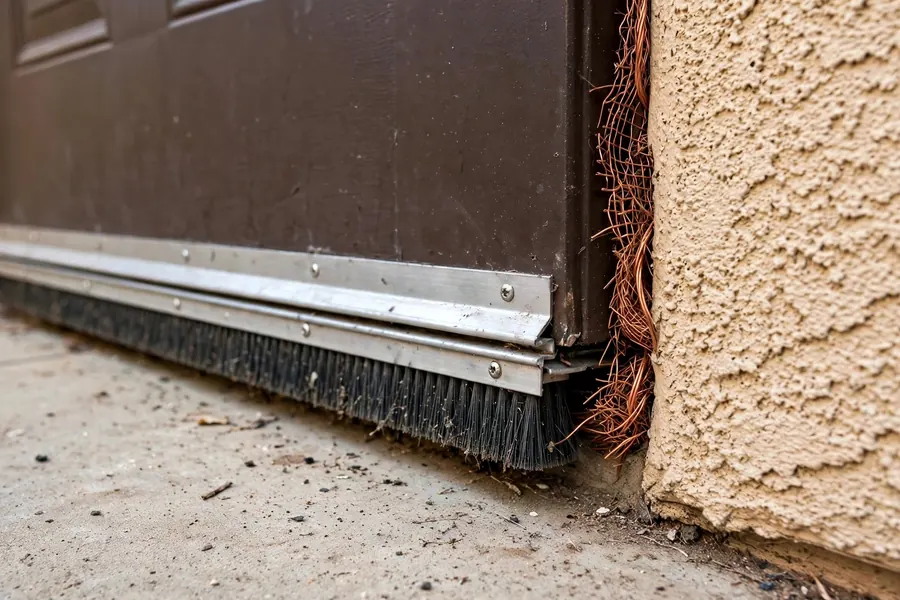
Every opening over 1/4 inch sealed with steel wool, galvanized mesh, and door sweeps — materials mice can't chew through. UC IPM calls exclusion the most successful and permanent form of house mouse control.
-
Sanitize the attractants
Pet food picked up at night, pantry goods in sealed containers, garbage tight-lidded. Sanitation has to be ongoing — without it, new mice find the same welcome mat.
Trap like a pro
How Pros Actually Trap Mice
UC IPM — the University of California's pest-management program — recommends snap traps as the first step for house mice, "especially when enough devices are placed in strategic locations near rodent activity." The keyword in that sentence is enough. Here's the detail most DIY jobs miss.
The right trap
Pros use expanded-trigger snap traps — the kind with the big pedal. Set along a runway, a good expanded-trigger trap catches mice even without bait. CDC guidance also prefers snap traps over glue boards or live traps, which stress the animal and raise disease-exposure risk.
Placement beats bait
Trigger end against the wall, at a right angle to it — mice run along baseboards, so the trap meets them head-on. Space traps about 6 feet apart, clustered where droppings show. For jumpers, set double sets: two traps side by side, about an inch apart.
Bait that works
Peanut butter is the universal go-to — aromatic, and a dab secured to the trigger so it can't be licked off. One pro trick: use the crunchy kind, because pantry bugs eat the smooth and leave the nuts behind. Cotton string soaked in vanilla works too — mice pull at it, which fires the trap. Some nights, nesting material like torn Q-tip cotton beats food entirely.
How many? For a minor infestation — one or two mice — six to eight traps can clear it in a couple of nights. Across a whole house, twenty-six or more traps is normal, and pros plan up to three traps per mouse. Most captures happen the first night. Clean up the old droppings first, check traps daily, and read what they tell you: fresh droppings near a trap means keep it there; a trap untouched for three days while activity continues elsewhere needs moving.
One thing to skip: ultrasonic repellers. UC IPM is blunt — "high frequency electronic devices aren't effective." Rodents habituate within days, the sound can't penetrate walls, and there are documented cases of mice nesting on top of active devices. Put the money toward traps and steel wool instead.
Learn from everyone else's mistakes
6 Mistakes Homeowners Make With Mouse Traps
We see the same six errors on nearly every DIY job in SLO. Fix these and your trap-out works the first time.
1. Too few traps
The number-one mistake. Two to four traps never cut it — a minor problem needs six to eight, and a real infestation needs dozens. Pros say to err on the side of more traps than you think you need.
2. Traps sitting in the open
Mice hug walls and travel in the dark. A trap in the middle of the floor is decoration. Tuck them behind the stove, under cabinets, and along baseboards where the droppings are.
3. Bait licked, trap never fires
A smear of peanut butter gets licked off without tripping the pedal. Press a dab into the trigger, tie it on, or switch to cotton string — anything that forces the mouse to pull.
4. No follow-up
Traps aren't set-and-forget. Check daily, remove catches, and sweep up old droppings so fresh ones tell you where activity continues. Stale evidence lies.
5. Reusing old traps forever
Mice can smell previous victims on a trap, which makes newcomers cautious. Retire traps that have already caught several mice — fresh traps catch better.
6. Trapping without sealing
The big one. If the 1/4-inch gaps stay open, trapping never ends — you just keep catching the next mouse. Seal first, or at least seal alongside the trap-out.
Entry science
A Mouse Fits Through a 1/4-Inch Gap
That's roughly the width of a pencil — and SLO County Public Health uses a nickel as the reference. A mouse's skull is fixed, but its body compresses, so if the head fits, the mouse fits.
The field rule is simple: if a pencil slides into a gap, a mouse can too. Walk your foundation, sill plate, and pipe penetrations with a pencil in hand. Every gap it enters gets sealed — copper mesh packed in and caulked over, or 1/4-inch hardware cloth screwed down. Never chicken wire, and never spray foam alone; mice chew straight through both. Door gaps over 1/4 inch get brush sweeps, because mice chew through rubber ones. Our rodent exclusion page covers the full material list and the outside-in process.
In SLO this matters more than most places. Stucco homes on slabs hide gaps at the sill plate and around every pipe stub, and tile roofs open up roof returns and ridge vents most homeowners never check. Seal the building like water can't get in, and mice can't either.
What it costs
What Mice Control Costs in SLO
A professional trapping program in California typically runs $250–$600, which usually covers the inspection, the trap-out, and two to four follow-up visits over about 30 days. What moves the number is scope: a single-room mouse problem with one entry point sits at the low end; a whole-house infestation with attic and crawlspace activity plus exclusion work climbs from there. Exclusion is priced separately — sealing is skilled labor with real materials, and it's the part that keeps the problem solved. Compare line items (inspection, trapping, exclusion materials, follow-ups, written warranty), not just the headline price.
Why our way works

Why Trapping + Exclusion Beats Poison for Mice
UC IPM prefers trapping indoors — and for good reason: a poisoned mouse dies inside your walls, and then you have an odor and sanitation problem instead of a mouse problem. Trapping removes the animal where you can dispose of it; exclusion makes sure the next mouse never gets in.
There's a legal angle too. California's rodenticide rules sharply restrict the old anticoagulant poisons for structural use, and it's illegal in California to relocate live-caught house mice without a permit. The compliant, effective path is the same one we'd recommend anyway: inspect, trap properly, seal everything, and keep the attractants under control.
Good to know
Mice Control Questions, Answered
Mice are about 5–7 inches including the tail, weigh roughly half an ounce, have relatively large ears, leave 1/4-inch rod-shaped droppings and a musky odor. Rats are much larger with bigger droppings — roof rat droppings are about 1/2 inch, Norway rat about 3/4 inch.
Most people set too few — that's the number-one DIY mistake. For a minor infestation (one or two mice), six to eight traps can clear it in a couple of nights; across a whole house, two dozen or more is normal. UC IPM recommends traps no more than 10 feet apart in active areas, close to walls, in secluded spots, behind objects, in dark corners, and wherever droppings are found. Setting them in pairs an inch or two apart increases success.
Very likely. A musky odor is a classic house mouse sign, along with 1/4-inch rod-shaped droppings, fine scratchy gnaw marks, and activity along baseboards and inside cabinets at night.
Yes. House mice climb any rough vertical surface and can jump 12 inches straight up. They reach attics through wall voids, pipe chases, and gaps around wiring — which is why sealing beats trapping alone.
Seeing mice in the open usually means more are hiding — mice are nocturnal and secretive. A specialist confirms the extent with an inspection; if it's truly minor, we'll tell you that instead of selling you a program.
No. UC IPM states plainly that high-frequency electronic devices aren't effective — rodents habituate within days, and the sound can't penetrate walls. There are documented cases of mice building nests directly on top of active devices.
They will if the entry points stay open — a mouse fits through a 1/4-inch gap. That's why our work pairs trapping with exclusion: remove the current mice, then seal every opening so the next ones can't get in.
Mice Don't Wait. Neither Should You.
One inspection tells you exactly what you're dealing with — species, entry points, and the plan to end it. Call now. Every job is backed by the same thorough standard SLO homeowners trust — inspection first, honest quote, sealed for good.
(805) 475-0516