For homes & rentals
Residential Rodent Control San Luis Obispo, CA
Residential our rodent control services built for the way people actually live here — homeowners, families, and renters. Whole-home inspection, species-matched trapping, and exclusion, with methods safe around pets, kids, and kitchens. No poison reliance, no single-visit promises.
- Inspection-first — we find every entry point
- Exclusion-first — sealed with steel, not poison
- Local — we know SLO's roof-rat pressure
The whole home, not one room
Residential SLO rodent control: What's Covered
Residential rodent control in San Luis Obispo covers the entire living space — attic, walls, kitchen, garage, crawl space, and yard — because rodents don't stay in one room. The program: inspect the whole property, remove the active population, seal every entry, and fix the attractants that invited them.
Inside the living space
Kitchens, pantries, and garages where house mice travel along walls and behind appliances. Droppings trails mapped, traps placed per UC IPM spec — not scattered at random.
Above and below
Attics and wall voids for roof rats; basements, crawl spaces, and foundations for Norway rats. Entries sealed to the 1/4-inch standard with metal, not foam — see how exclusion works.
Around the property
The yard pressure that keeps the problem recurring: fallen fruit, overhanging limbs, climbing vines, tight garbage lids, pet food brought in at night. Habitat work is half the job.
How homes invite rodents
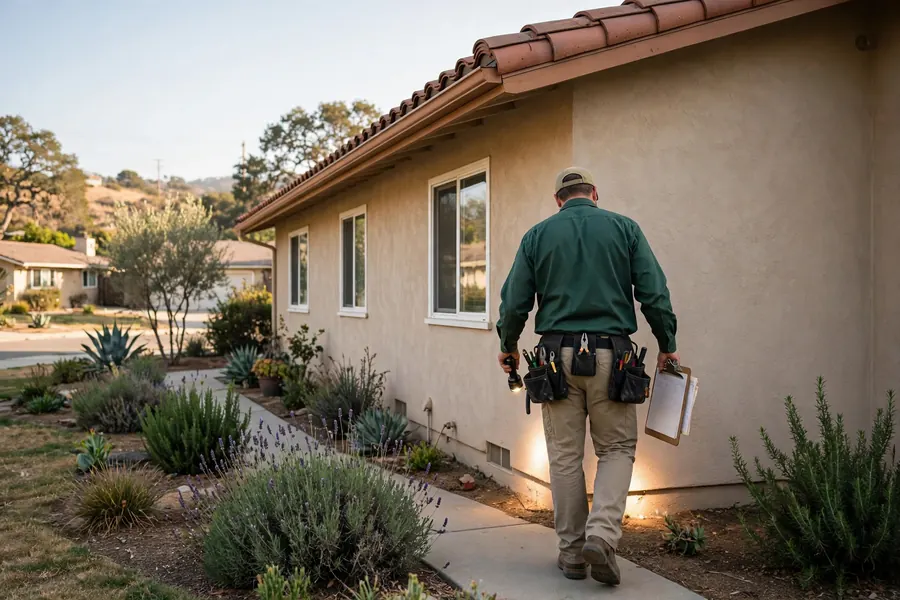
Room by Room: Where Rodents Hide in SLO Homes
Rodents need three things: food, shelter, and a way in. In San Luis Obispo homes, the usual chain is uncovered or overflowing garbage, cluttered storage, pet food left out, and any 1/4-inch opening they can exploit. Breaking that chain is what SLO rodent control is really about: food secured, shelter removed, entries sealed.
Kitchen & pantry
The top food source: open dry goods, crumbs behind appliances, pet food left out overnight. Mice run baseboards and wall voids here; droppings in cabinets mean active traffic.
Garage & storage
Cluttered garages and outdoor storage are nesting ground zero — shelter plus cover. Bird seed, pet food, and grills stored in bags are all mouse magnets.
Attic & crawl space
Roof rats nest in attics entered through roofline gaps and vents; Norway rats work crawl spaces and foundations. Insulation makes a warm, quiet nest — and droppings up there go unnoticed for months.
The yard line
Citrus and avocado trees feeding roof rats, ivy slopes and palm canopies housing them, fence tops and utility lines as highways. The property line is where residential rodent control starts, not ends.
Not every home is the same
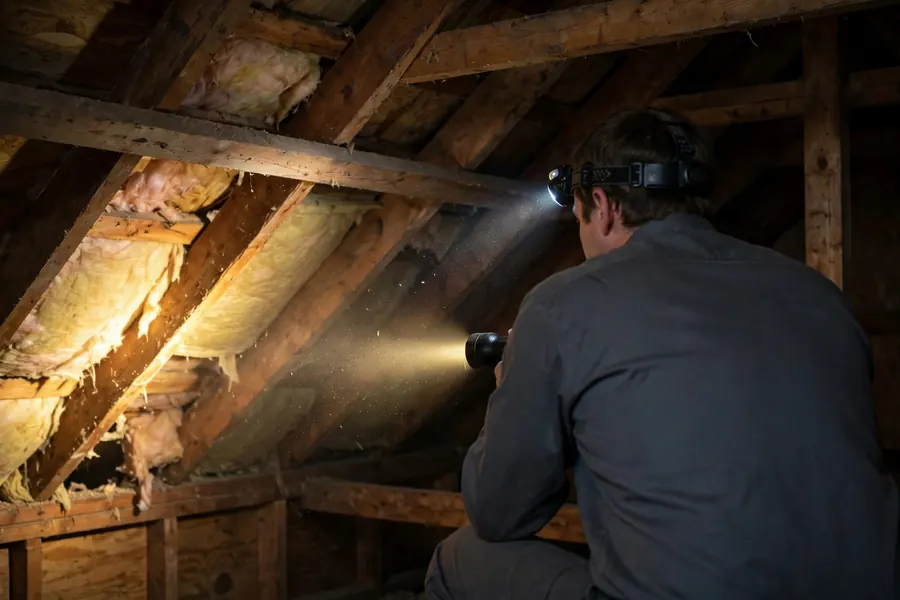
Home Types, Different Weak Points
A century-old Victorian and a 1970s tract house don't share the same rodent problems. We adjust the inspection to the house type.
Historic Victorians & older downtown homes
Raised foundations, crawl spaces, and aged fascia gaps at the roofline — classic entries. Original vents often lack screens entirely. These homes need the most thorough envelope inspection.
Student rentals near Cal Poly
High-turnover rentals where sanitation is the main driver: overflowing trash, cluttered garages, pet doors, food left out. Landlord-tenant coordination matters — see the renters section below. Own a home you don't live in full-time? See our rodent control for second homes.
Laguna Lake-area tracts
Tile roofs with natural gaps rats travel like roads, garage doors with worn weatherstripping, and dense backyard landscaping — citrus, ivy, bougainvillea — feeding and housing roof rats.
Hillside homes & edge-of-town properties
Brush, fields, and native vegetation right at the fence line mean constant pressure. These homes benefit most from habitat trimming plus seasonal monitoring after the initial job.
Safe for lived-in homes
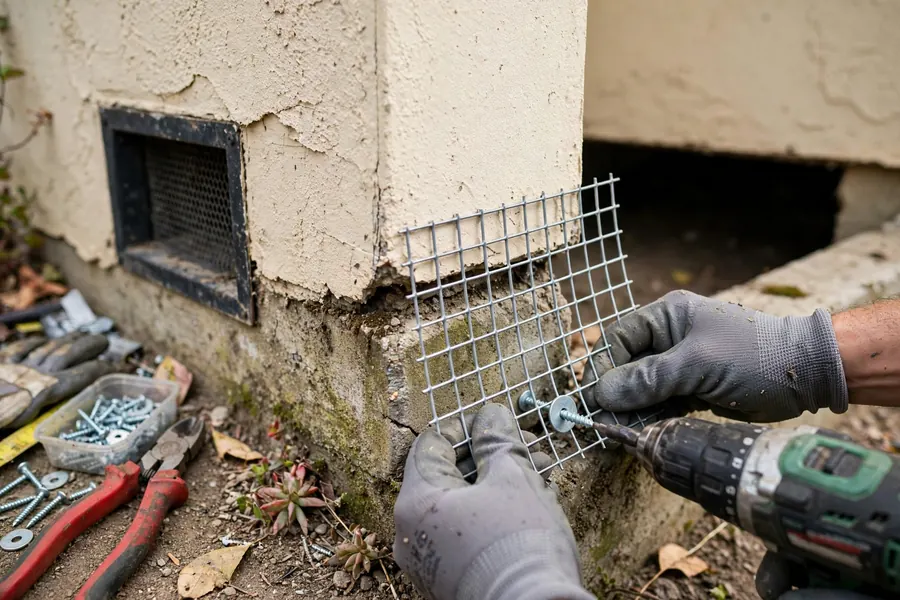
Pets, Kids, and Kitchens: The Safety-First Approach
Rodent control happens where your family lives, so the method has to fit a lived-in home — not a vacant lot.
No poison reliance
We don't depend on broadcast rodenticide. California's rules sharply restrict the old poisons anyway — and poisoned rodents die in walls, creating odor and sanitation problems.
Traps where they belong
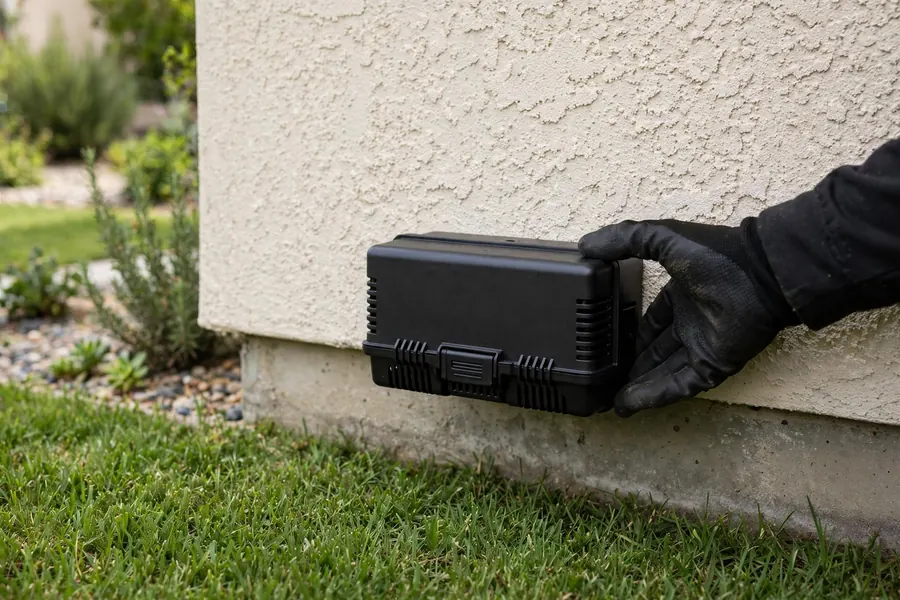
Snap traps indoors per UC IPM — in dark corners, behind objects, along walls — placed where pets and kids can't reach. Any outdoor stations are tamper-resistant.
Exclusion does the heavy lifting
The safest rodent control is a sealed building. Wire mesh, sheet metal, and door sweeps need no poison at all — UC IPM's most successful, longest-lasting strategy.
For SLO renters
Renters: Who Handles a Rodent Problem?
With Cal Poly drawing thousands of renters into SLO's group houses and apartments, this comes up constantly. The short answer: it depends on your lease and what's causing the problem — but either way, act fast and document.
Document & notify
Photograph droppings, damage, and entry points; notify your landlord or property manager in writing, promptly. A written record protects you no matter how it resolves. Manage multiple units? See our rodent control for property managers.
Hold up your end
Keep your unit sanitary — sealed food, tight garbage, no pet food left out. Landlords can't fix a sanitation-driven mouse problem that restarts every week.
We work with both
We inspect and report for tenants, landlords, and property managers alike, with written inspection reports either party can use. (This isn't legal advice — lease terms decide responsibility.)
Seasonality
The SLO Rodent Calendar: When They Come Inside
Direct answer: indoor invasion in San Luis Obispo starts with the first rains — usually October or November — and peaks November through January. Coastal climate pushes rodents toward homes earlier in fall than inland California, and roof rats breed year-round here, so populations never truly crash.
October–November: the invasion
First heavy rain drives roof rats and mice from vegetation, creek corridors, and hillsides into attics and wall voids. If you hear new scratching after a storm, that's the season starting — not a coincidence.
November–January: peak pressure
The coldest, wettest months are when complaints peak. Homes near SLO Creek, Stenner Creek, or Prefumo Creek corridors, and houses under Santa Lucia foothill slopes, feel it first — rats descend from vegetation above and arrive at the roof.
February–September: the quiet build
Fewer complaints, but this is when exclusion pays for itself. Sealing entries in spring and summer means the fall invasion finds a closed house. Post-storm checks after winter rains catch new entries before the next cycle.
Real numbers
What Residential Rodent Control Costs in SLO
Direct answer: inspection runs $0–$150, a trapping program $250–$600 (including 2–4 follow-ups over about 30 days), full-home exclusion $500–$3,000+ depending on home size and entry count, and attic cleanup $1,500–$8,000+ if droppings and insulation need remediation. All ranges — your home's specifics decide where you land.
What drives the price up
Tile roofs raise exclusion labor (roofline work is slow and careful). Older homes mean more entries: settlement cracks, original vents, aging door seals. Homes on ivy slopes or near creek corridors typically need more linear feet of sealing.
What a quote should include
Line items, not a headline: inspection findings, trapping plan with follow-up count, exclusion materials and linear footage, sanitation scope, and a written warranty. A quote that covers only trapping — with no exclusion, follow-ups, or warranty — is a red flag. Our exclusion cost breakdown shows how to compare quotes line by line.
The scam pattern to avoid
California has a known pattern: a low-cost inspection followed by a five-figure attic contamination demand. If a quote jumps from inspection to $10,000 with no itemized scope, get a second licensed opinion before signing anything.
Good to know
Residential Rodent Control Questions, Answered
The usual chain: uncovered or overflowing garbage, cluttered indoor or outdoor storage, pet food left out, unsealed garbage cans, plus entry points — mice exploit any 1/4-inch opening. Food, shelter, and a way in: remove all three.
Cost depends on species and infestation size (mice vs. rats), how extensive the entry points and damage are, home size and accessibility (attic, crawl space), whether attic cleanup is needed, and the number of follow-up visits. An inspection gives you an exact, honest price for your home.
Yes — IPM is built for lived-in homes. We trap indoors rather than laying poison, keep outdoor work in tamper-resistant stations, and never rely on broadcast rodenticide. Your kitchen, kids, and pets are worked around, not around worked.
Plan on several weeks. Rats and mice are cautious around new traps, so pre-baiting and two to four follow-ups are normal. Then exclusion keeps them out — that's the long-term fix.
It depends on your lease and the cause — document everything, notify your landlord or property manager promptly, and keep sanitation up on your end. We work with both tenants and landlords and can provide a written inspection report.
Not always — if exclusion was thorough and the attractants are gone, many homes stay clear without a program. In high-pressure spots (near fields, heavy vegetation, older rentals), seasonal monitoring visits keep small issues from becoming infestations.
If they’re in your living space — kitchen, pantry, bedrooms — yes. We treat those jobs as urgent and schedule within days, not weeks. First visit is trapping plus a full entry-point inspection, because killing what’s inside means nothing if more keep coming through the same gap.
Indoor invasion typically starts with the first heavy rains in October or November and peaks November through January. Coastal climate pushes rodents inside earlier in fall than inland areas. Roof rats breed year-round in California, so while complaints peak in winter, the population never truly disappears — spring and summer are the best time for preventive exclusion.
Itemized line items: inspection findings with photos, the trapping plan including how many follow-up visits, exclusion materials and approximate linear footage, any sanitation or attic cleanup scope, and a written warranty. Compare quotes line by line, not by headline price — and be wary of any quote that covers trapping alone with no exclusion or follow-ups.
Your Whole Home, Rodent-Free.
One inspection covers attic to foundation — species, entries, attractants, and the plan to end it. Call now. Every job is backed by homeowners trust — thorough inspection, honest quote, sealed for good.
(805) 475-0516