Monterey Heights · 93405
Rodent Control Monterey Heights, San Luis Obispo, CA
Rodent control Monterey Heights starts with the slope. This is an established hillside neighbourhood between downtown and Cal Poly, with narrow, winding streets and elevated views over the city. Homes run from 1920s Spanish-style bungalows with period details intact to California Moderne houses perched on stilts, plus mid-century homes between them. Steep siting and multi-storey construction change where entries sit — and how an inspection has to work.
- Inspection-first — we find every entry point
- Exclusion-first — sealed with steel, not poison
- Local — we know SLO's roof-rat pressure
Monterey Heights snapshot
Our work here
How We Seal a Monterey Heights Home
Direct answer: inspection level by level, exclusion first, poison last under California's AB 1788 / AB 2552 rules. Steep access does not change the process — it changes the order we walk it in. Every level's entries go into one written scope before any sealing starts. Where an attic on any level already holds droppings, the scope pairs the sealing with droppings cleanup first.
Rodent Exclusion
Level-by-level entry sealing for steep hillside homes.
Rodent Exclusion San Luis ObispoRoof Rat Control
Roof-rat removal for climbers working the rooflines.
Roof Rat Control San Luis ObispoRodent Control Program
Seasonal inspections and monitoring for hillside and creek-edge homes.
Rodent Control Program San Luis ObispoHillside entries
Sealing a Steep Hillside Home
Direct answer: start at the roofline and work down every level. A hillside home does not have one ground floor to seal — it has several levels, each with its own roofline, deck and wall junctions, and stilt-perched sections add underfloor gaps most flat-lot homes never have. Many Monterey Heights homes sit on fairly steep hillsides, sometimes requiring two-or-more-storey construction, with limited usable yard space. That shape pushes entries upward: attic vents, rooflines, deck junctions and the gaps where a stilt section meets the main house. Access is tight on narrow, winding streets, so the inspection is done on foot, level by level, not from the driveway.
Roofline and attic entries
On a multi-storey hillside home, the attic is not one space at one height. Vents, eaves and roof junctions on each level get checked, because a gap at the top level is a gap into the whole house. Mice use the same multi-level gaps — our mice control work sizes traps to the species and places them along the walls where house mice travel, level by level.
Stilt and multi-level gaps
Stilt-perched sections and split levels leave underfloor and junction gaps where sections meet. We check where each section joins the next, not just the outer walls.
Yard and fence lines
Limited yard space means fences, lines and trees sit close to the house. UC Master Gardeners guidance for SLO County notes roof rats run along utility lines and fence tops and live in trees or attics — so lines and overhanging branches are part of the check, as general context, not as a claim about this street.
Local landmarks
Landmarks and Streets Around Monterey Heights
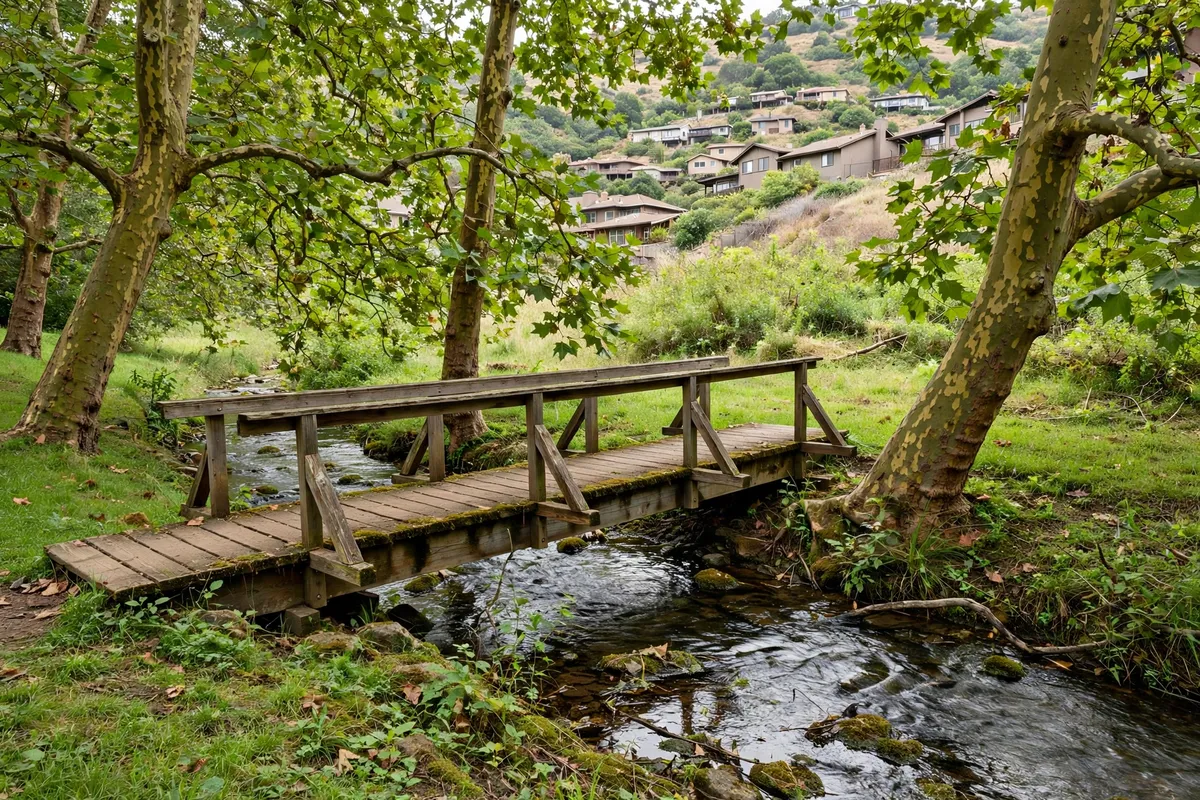
Direct answer: Monterey Heights sits between downtown and Cal Poly, reached up Monterey Street, with Buena Vista Avenue, Santa Ynez Avenue and San Miguel Avenue among its streets. Buena Vista Avenue carries the neighbourhood's own small park, a mini-park on the 100 block, and homes from a 1935 Spanish bungalow at 302 Buena Vista to a 1951 bungalow at 324 Buena Vista. Santa Ynez Avenue and San Miguel Avenue carry the same mix of older and newer stock, including a contemporary home at 2318 Santa Ynez. The area is a recognised neighbourhood with its own residential permit parking district, formed in May 1997 — a separate district from Alta Vista nearby, which is a different neighbourhood and not part of Monterey Heights. Close by are Cuesta Park, also called Cuesta Canyon Park, at 2400 Loomis Road, on a creek between San Luis Drive and the freeway, with a footbridge spanning San Luis Creek, and the views listings cite from here toward Cerro San Luis and Bishop Peak. Cal Poly sits nearby to the north and west, not inside Monterey Heights, and downtown's Mission Plaza and creek walk are a few blocks away.
The hillside pattern
Why Hillside Homes Need a Different Inspection
Direct answer: elevation changes the entry map. On flat ground, entries cluster at grade. On a steep, multi-storey hillside home, entries scatter across levels — rooflines, decks, stilt junctions, retaining edges — and a ground-floor-only inspection misses most of them. The park and creek edge adds its own question to ask about, not a claim to make. Cuesta Park's creek, grass, trees and picnic areas sit close to homes here, so the inspection asks about the yard edge and the lines and branches that bridge it. Where gardens carry citrus or avocado, UC County guidance notes rats favour those fruits — a reason to check the trees, stated as general guidance, not as a neighbourhood trait. The north and west sides carry more student rentals while farther uphill toward Cuesta Park is quieter and more family-oriented, so a rental inspection here also asks who reports a noise first — because on a multi-unit hillside property, the first report often comes late. On the north and west sides, where student rentals cluster, student housing rodent control scopes the whole building for the landlord, with recurring checks that survive turnover.
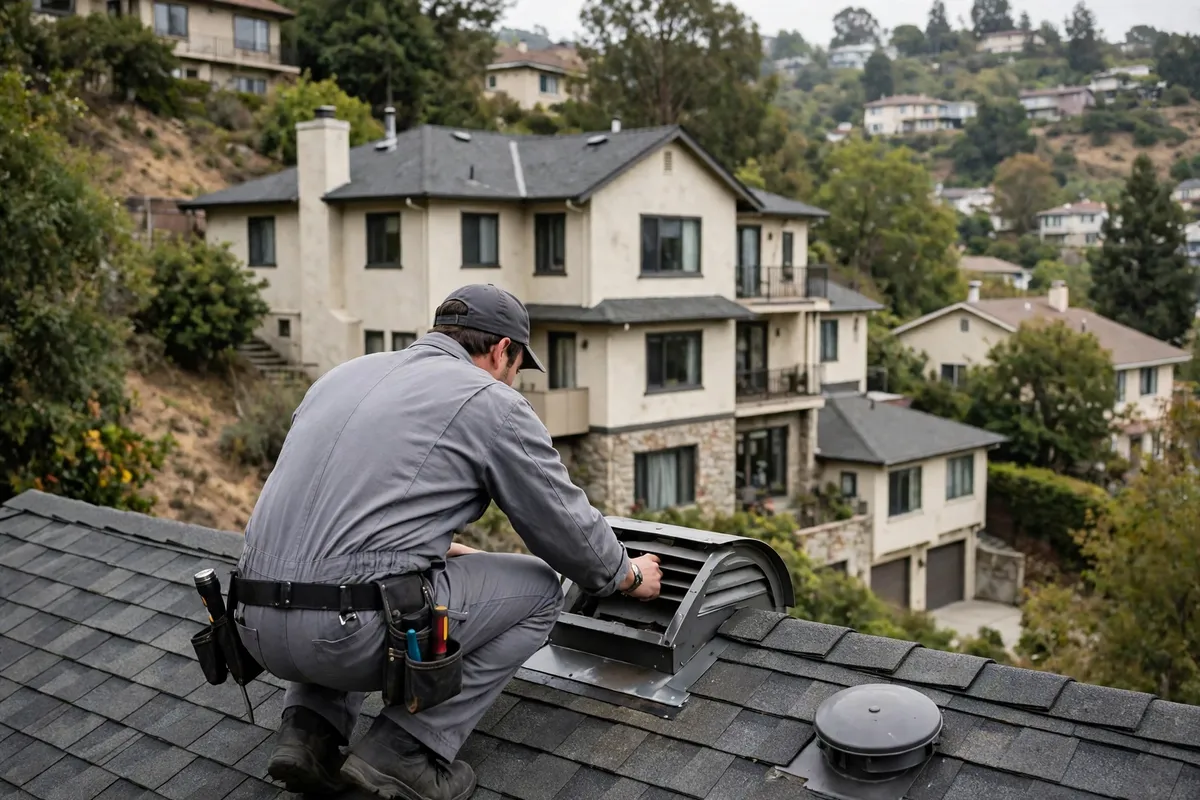
Noise in the Attic on a Steep Lot? We Know the Layout.
Hillside homes have entries on every level — and we seal every one. Call now for rodent control in 93405.
(805) 475-0516Good to know
Monterey Heights Rodent Questions, Answered
What hillside homeowners ask us.
Exclusion first. We find the entries across every level — rooflines, deck junctions, stilt gaps — seal them, and monitor. California's AB 1788 / AB 2552 rules restrict poison use, and bait is not the plan on a home with this many levels to seal.
Night noise in an attic fits the UC County guidance for roof rats: nocturnal, good climbers, living in trees or attics and running along lines and fence tops. On a steep home the entries to check are the vents, eaves and junctions on each level, plus stilt-section joints. No diagnosis is made for any individual home without an inspection.
It changes the questions, not the verdict. The inspection adds the yard edge, the lines and branches that bridge it, and the creek-side cover near the house. Proximity to a park is not presented as proof of migration into homes.
The underfloor and junction gaps. Where a stilt section meets the main house, and where decks meet walls, there are seams a flat-lot home never has. Those joints are inspected as entries in their own right.
Either landlord or tenant can call. The inspection covers the whole building, every level, plus shared entries like laundry and garage gaps, because on a rental the first report often comes late and the entry is rarely in the room where the noise is heard.
As general guidance, yes, they are worth checking. UC County guidance notes rats favour avocados and citrus, and recommends thinning vegetation and removing overhanging vines and branches. That is county-level guidance applied as a checklist item, not a claim about Monterey Heights gardens.
A level-by-level inspection of the whole home, a written scope of the entries found, sealing work, and monitoring checks after. You get the scope in writing before work starts.