Johnson Ranch · South Higuera corridor
Rodent Control Johnson Ranch, San Luis Obispo, CA
Rodent control Johnson Ranch covers the homes along the South Higuera corridor beside Johnson Ranch Open Space, the 242-acre city-owned preserve south of the city. Johnson Ranch is open space, not a housing tract, and this page does not pretend otherwise. No housing tract traits were sourced for corridor homes — no foundation, attic, garage or roof-type survey exists for them — so the inspection here is built per home, not from a tract template. The edge itself is the story: a 242-acre grassland and oak preserve with a 3.7-mile loop, Dry Creek riparian work inside it, and Froom Creek running through the nearby Froom Ranch plan area.
- Inspection-first — we find every entry point
- Exclusion-first — sealed with steel, not poison
- Local — we know SLO's roof-rat pressure
Johnson Ranch snapshot
Our work here
How We Seal a Corridor Home
Direct answer: inspection first, exclusion first, poison last under California's AB 1788 / AB 2552 rules. Edge homes get the preserve-facing side checked closest and the rest of the house checked the same way. Where the home is part of a multi-unit or senior-living building, the scope is written for the building, with the manager or board looped in where the building requires it. Where a building holds many units, our mice control work covers the shared structure, not just the unit that called — the scope is written for the building, not the room.
Residential Rodent Control
Per-home inspection for corridor homes.
Residential Rodent Control San Luis ObispoRodent Control Program
Seasonal inspections and monitoring for edge homes.
Rodent Control Program San Luis ObispoEdge entries
Sealing a Home Beside the Preserve
Direct answer: check the preserve-facing side first, then the whole house. A home beside a 242-acre preserve has an edge side — rooflines, vents and lower entries facing grassland and oak — and that side gets the closest look, but the inspection still covers every entry, because rats use the quiet side too. The preserve's own ground is rolling grassy hills, serpentine rocks and oak trees, on land that was a working ranch for a century before the City purchased it in 2001 and opened the loop trail in 2009. That is edge context, not a pressure claim: no source states rodent levels for the corridor, and none is claimed here. For the roofline itself, the page uses only the general checklist — loose tiles or damaged shingles, unscreened attic vents, damaged soffits and fascia, utility penetrations, flashing gaps and vegetation bridges to rooflines, with nesting in attics and wall voids. That checklist is general guidance, stated as such, not a claim that these traits were verified on corridor homes.
Roofline and vent entries
Vents, soffits, fascia and flashing gaps on the preserve-facing roofline first, then every other roofline on the house, because a roofline gap is a gap into the whole building. Roof rats use the same vegetation bridges to reach those rooflines — roof rat control pairs elevated trapping for climbers with sealing the entries the branches reach.
Vegetation bridges
Grassland and oak at the edge mean branches and vegetation that bridge to rooflines. Overhanging growth is checked as a bridge, and trimming is discussed as part of the scope where it applies. Deer mice work the same grassland edge — deer mouse control identifies the species first, because deer mice and roof rats need different answers.
Creek-side entries
Dry Creek riparian work runs inside the preserve, and Froom Creek runs through the nearby Froom Ranch plan area. Where a home sits near a creek corridor, the creek-side vents and gaps join the checklist as context notes, not as findings.
Local landmarks
Landmarks and Streets Around Johnson Ranch
Direct answer: Johnson Ranch Open Space sits south of the city, listed at 5182 and 5190 Ontario Road near US Highway 101, with its trailhead at the end of South Higuera Street and trail access off Highway 101 at the Higuera Street exit, between San Luis Obispo and Pismo Beach. The Johnson Ranch Loop runs 3.7 miles through the preserve's rolling grassy hills, serpentine rocks and oak trees, with a shorter shortcut option, and a 1.7-mile Johnson Ranch–Irish Hills connector links the preserve toward Irish Hills. South Higuera Street is the corridor spine: Villaggio, the Life Plan Community with its Mediterranean-village design of a central Piazza, courtyards and hillside views, sits at 3765 South Higuera Street as a corridor neighbour — named here as a neighbour, not as the page's subject, because this page covers the corridor homes beside the preserve. Froom Ranch Way and Irish Hills Plaza sit at the corner of Los Osos Valley Road and Froom Ranch Way as a corridor reference, and Laguna Middle School at 11050 Los Osos Valley Road is a nearby school reference only, not a school-assignment claim. This page publishes no ZIP for the corridor: sources conflict directly on it, and no single ZIP was verified. It also publishes no boundary line.
The corridor pattern
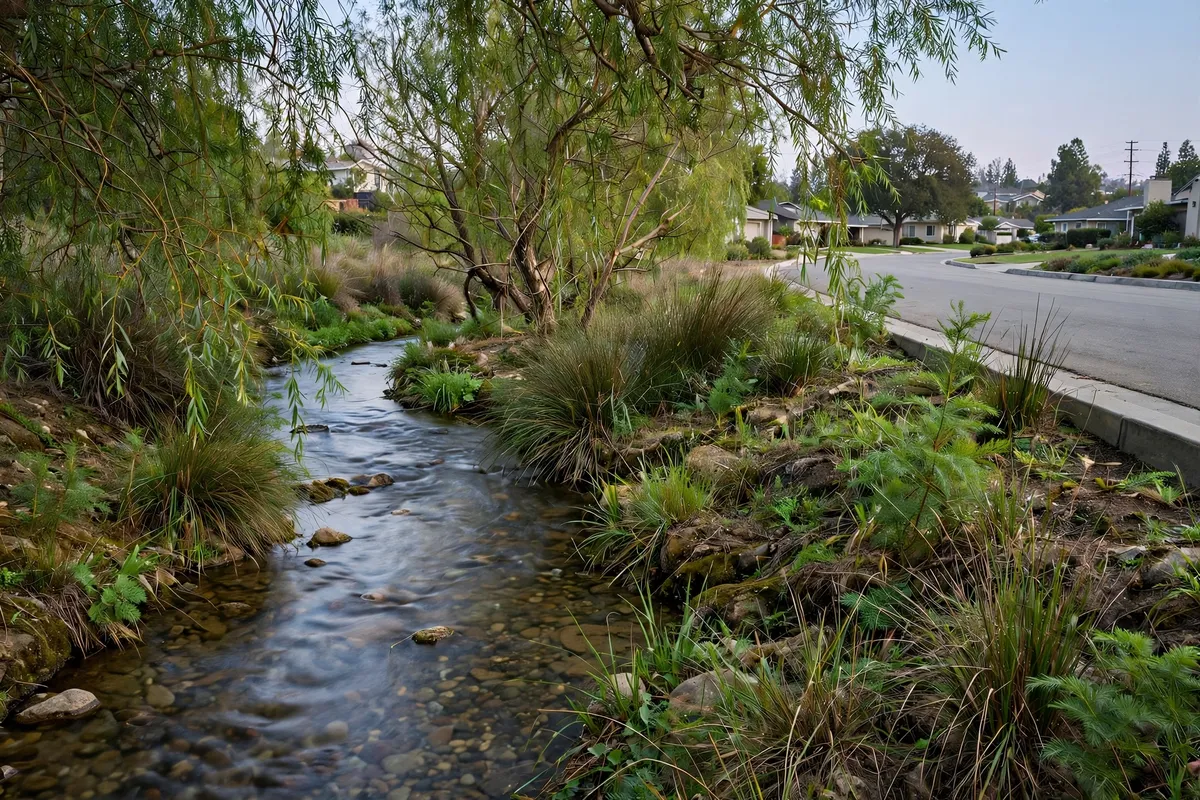
Why an Edge Corridor Needs Honest Scoping
Direct answer: because the usual location-page template does not fit here. There is no tract to describe — the preserve is the landmark, the corridor homes are the subject, and no source gives those homes a shared foundation, attic, garage or roof profile. A page that invented one would be guessing, so this page does the opposite: it says what is verified — the preserve, the loop, the creeks, the corridor streets — and builds the inspection per home. That honesty changes the work in one practical way. On a tract page, the inspection can lean on the tract's known traits. Here it cannot, so the inspection starts from the general roofline checklist and the edge and creek context, then narrows to what the individual home actually shows. Villaggio's multi-unit question is handled the same way: a Life Plan Community with varied unit types for independent senior housing plus assisted living, memory care and skilled nursing raises a genuine unit-versus-building scope question for its residents, and that question is answered in the FAQ — without turning Villaggio into this page's housing claim.

Home Beside the Preserve? We Know the Edge.
Corridor homes beside the preserve have edge entries — and we seal every one. Call now for rodent control beside Johnson Ranch Open Space.
(805) 475-0516Good to know
Johnson Ranch Rodent Questions, Answered
What preserve-edge homeowners ask us.
Yes, the order. The preserve-facing side and any creek-side vents and gaps get checked first, then the whole house. The 242-acre preserve, the 1.7-mile connector toward Irish Hills, Dry Creek riparian work and Froom Creek are genuine edge and creek context — not a claim of higher rodent pressure.
The general roofline checklist: loose tiles or damaged shingles, unscreened attic vents, damaged soffits and fascia, utility penetrations, flashing gaps and vegetation bridges, with nesting in attics and wall voids. That checklist is general guidance applied to your home's actual roofline, not a claim that tile-roof traits were verified for the whole corridor.
The scope changes from the unit to the building. Varied unit types plus assisted living, memory care and skilled nursing mean shared walls, common areas and multiple entries per building, so the inspection covers the shared structure and the scope is written for the building, with the manager or board looped in.
Because none was verified. Johnson Ranch is a 242-acre city-owned preserve, not a housing tract, and no source gives corridor homes a shared foundation, attic, garage or roof profile. The inspection is therefore built per home, not from a tract template.
No such claim is made here. No source states rodent levels for this corridor. The preserve shapes the inspection checklist — edge side first, creek-side gaps included — and nothing more is claimed from it.
Exclusion comes first, by law and by process. California's AB 1788 / AB 2552 rules restrict poison use, and our standard is to find and seal entries and monitor, with poison as a last resort, not the plan.
An inspection of the whole home including preserve-facing and creek-side entries, a written scope of the entries found, sealing work, and monitoring checks after. You get the scope in writing before work starts.