The hidden bill
Rodent Damage in SLO Homes: Wires, Insulation, and Pipes
Short answer: wiring, insulation, and pipes — in that order of danger. Rodent damage in SLO homes hides in attics and wall voids, and the bill usually shows up months after the gnawing starts. Here is what rats actually destroy, what it costs to fix, and why insurance usually will not pay.
- NFPA: rodents suspected in up to 20–25% of undetermined fires
- Insulation shredded for nests, soiled with waste
- HO-3 policies exclude vermin damage
The fire risk
Chewed Wiring: The Fire Risk
Direct answer: because a rat’s teeth never stop growing, and your attic wiring is the perfect file.
Teeth that never stop
Rodent incisors grow continuously, so rats and mice must gnaw constantly to keep them filed down. The soft PVC sheathing on household Romex cable is ideal chewing material — and it strips off easily.
Bare copper, live current
Once the insulation is gone, bare conductors can touch, short-circuit, or arc. An arc fault throws sparks into dry wood, attic dust, and nesting material — and standard breakers often do not catch it.
The NFPA estimate
The National Fire Protection Association estimates rodents are suspected in up to 20 to 25 percent of house fires where the cause is listed as undetermined. That is the estimate for undetermined-cause fires — not all fires — but it is the number electricians quote for a reason.
The warning signs
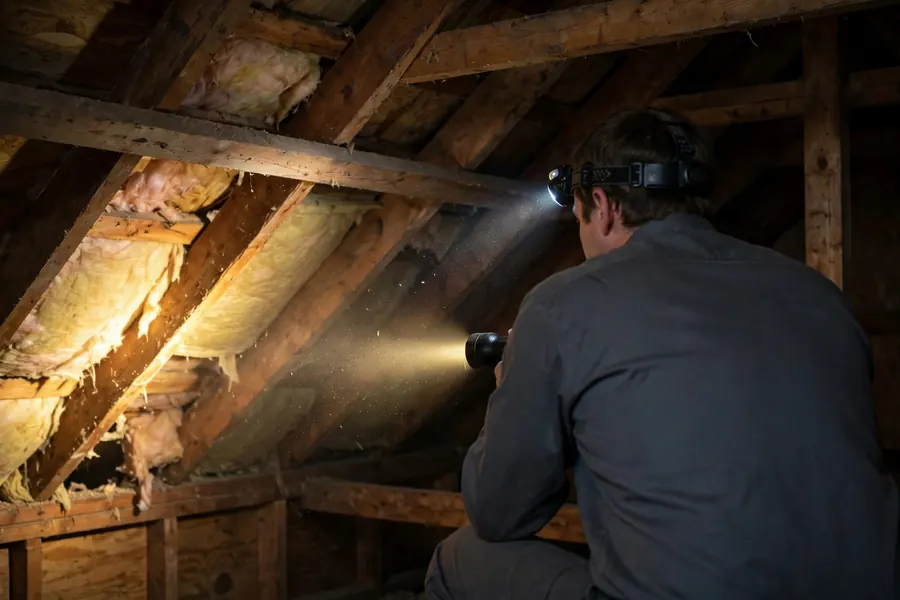
Flickering lights, breakers tripping without cause, outlets that die, or a faint burning smell. Any of these means turn off the circuit and call a licensed electrician today. Our rat control inspection checks the attic wiring routes first.
The slow leak
Shredded Insulation: The Slow Energy Leak
Direct answer: because insulation is nesting material to a rat — and once it is shredded and soiled, it stops insulating.
Shredded for nests
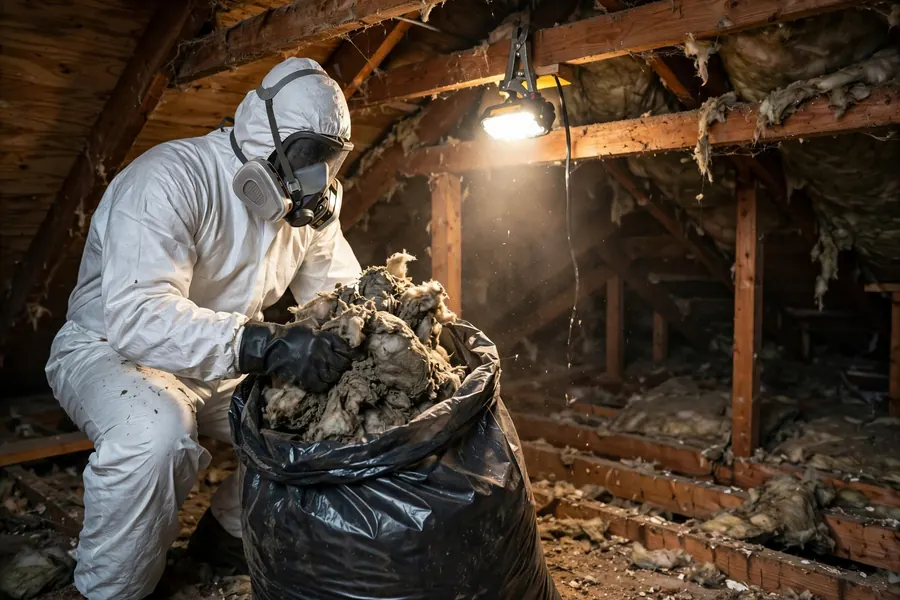
UC IPM lists the damage plainly: rats shred insulative materials in walls and ceilings for use in their nests. Fiberglass batts get tunneled through, flattened, and pulled apart.
Soiled, not just torn
Nesting insulation is also fouled with urine and droppings. That contamination is why damaged insulation usually has to be removed, not just patched — and why cleanup needs protective gear. See our attic cleanup page.
Your bills climb quietly
Torn, flattened insulation loses its R-value, so your heating and cooling work harder for the same comfort. A slow rise in energy bills with no other explanation is worth an attic look.
Mold follows moisture
Damaged insulation holds moisture, and moisture plus organic matter is how mold starts. A rat problem left alone often becomes a mold problem — and a second bill.
The invisible leak
Gnawed Pipes: The Leak You Don’t See
Direct answer: because rats chew plastic and soft metal — and a pinhole leak inside a wall can run for months before anyone notices.
PVC is chewable
Rodents gnaw through plastic pipes, leaving tiny holes that leak slowly. The water shows up as a stain on a ceiling or a musty smell — long after the leak started.
Copper and lead too
UC IPM notes Norway rats can gnaw soft metals such as copper and lead, as well as plastic and wood. No household pipe material is rat-proof.
Pressure drops, bills rise
Even small holes reduce water pressure, and a single hidden leak can waste a large amount of water over a month. A water bill that jumps without explanation is a leak until proven otherwise.
The gas line warning
Rats may chew directly on natural gas lines, creating explosion and fire hazards. That is a UC IPM warning, not a scare line — and it is why any gas smell means leaving the house first and calling from outside.
The numbers
What It Costs to Fix
Direct answer: because the gnawing is cheap and the repair is not — these are reported ranges from national sources, not our prices, and SLO homes vary.
| Damage | What happens | Reported repair ranges |
|---|---|---|
| Electrical repair | Chewed wire insulation, shorts, dead circuits | About $150–$500 (Angi, 2026); full rewiring $1,500–$10,000+ |
| Insulation replacement | Shredded, tunneled, soiled batts removed and replaced | About $1,500–$3,000 |
| Plumbing repair | Gnarled PVC or copper, slow leaks, water damage | About $180–$450 (Angi, 2026) |
| Drywall repair | Holes, stains, and access cuts to reach the damage | About $350–$800 (Angi, 2026) |
| Whole-infestation repair | Wiring + insulation + cleanup + water damage together | About $2,000–$20,000 depending on extent |
The pattern in every range above is the same: the longer the colony has been working, the wider the bill. A homeowner quoted for attic insulation work alone has reported totals near $6,500 to $10,000 once removal, replacement, and a wiring check are included. Catching activity in the first month is what keeps a four-figure job from becoming a five-figure one — and the cost of the rodent work itself is the smallest line on the page. If you want the exclusion side priced, our exclusion cost guide breaks down what sealing a SLO home actually runs.
Read the policy
Why Insurance Usually Won’t Pay
Direct answer: because standard homeowners policies exclude rodent damage outright — and the one exception most people miss is the damage that comes after.
The HO-3 exclusion
The standard HO-3 policy form explicitly excludes losses caused by "birds, vermin, rodents, or insects," according to the Insurance Information Institute. The chewed wire, the shredded insulation, the gnawed pipe — all excluded.
Gradual, not sudden
Insurers treat rodent damage as a maintenance issue, not a sudden event. It develops over weeks or months, and the policy is built for sudden, unexpected losses like fire, storms, and break-ins.
The ensuing-loss exception
Here is the nuance that matters: if excluded rodent damage causes a covered peril, the resulting damage may still be covered. Rats chew wiring and the wiring sparks a fire — the fire damage is typically covered, even though the chewed wiring is not.
Water damage, same logic
A chewed pipe itself is excluded; the water damage that follows from the leak may be covered as an ensuing loss. Read your policy and ask your agent before you assume either way — coverage turns on your exact wording.
Catch it early
How to Catch Damage Early
Direct answer: because every month of quiet gnawing adds to the bill — and the signs are all visible if you know where to look.
-
Look in the attic twice a year
Droppings, gnaw marks on wood and wiring, flattened or tunneled insulation, and grease rub marks along beams and pipes. Rat gnaw marks run about 1/6 inch wide; mouse marks about 1/12 inch, per UC IPM.
-
Watch the lights and the breakers
Flickering lights or a breaker that trips without cause can mean chewed wiring. Treat it as urgent, not annoying — and get an electrician involved, not just a trapper.
-
Watch the water bill
A bill that jumps without a change in use is a leak until proven otherwise. Check the water meter: if it moves with every tap off, water is going somewhere it should not.
-
Seal first, then monitor
Trap the population, seal every gap over 1/4 inch, and leave a few monitors in place. Our exclusion service closes the entries; monitoring tells you the pressure has actually dropped.
Good to know
Rodent Damage Questions, Answered
Yes — that is the most serious risk. Chewed wire insulation exposes live conductors, which can short-circuit or arc. The NFPA estimates rodents are suspected in up to 20 to 25 percent of house fires where the cause is undetermined. The fire starts in the attic, where nobody sees it.
Flickering lights, breakers that trip for no clear reason, outlets that stop working, or a burning smell near a wall or ceiling. Any of those means turn off the circuit and call a licensed electrician — do not wait for an inspection to confirm it.
It can be. Insulation soiled with urine and droppings carries the same contamination risks as any rodent waste, and disturbed insulation spreads dust through the house. Cleanup needs protective gear — it is not a DIY sweep-up job.
Usually not the pipe itself — standard HO-3 policies exclude damage caused by rodents and vermin. But water damage that results from the leak may be covered as an ensuing loss. Read your policy and ask your agent before you assume either way.
UC IPM warns rats may even chew directly on natural gas lines, creating explosion and fire hazards. If you smell gas, leave the house and call your gas utility or 911 from outside — do not flip switches or use your phone inside.
Fast, and quietly. A colony breeds while you sleep — roof rats average 3 to 5 litters a year with up to 8 young each — and every week in the attic is more gnawing, more shredding, and more contamination. Months of quiet damage is the normal pattern.
Gnaw marks on wood, wiring, and pipes; flattened or tunneled insulation; droppings and grease rub marks along beams; and any flickering lights or water stains that appeared without explanation. That is the damage checklist our inspection runs through.
Find the Damage Before It Finds Your Wallet.
An attic inspection shows the wiring, the insulation, and the pipes — before the bill grows. Call now or book an inspection.
(805) 475-0516SLO Rodent Control — inspection-first rodent control in San Luis Obispo, CA.