Tenants & landlords
Who Pays for Rodent Control in SLO Rentals — Landlord or Tenant?
Short answer: usually the landlord. Rodent control in SLO rentals falls on the property owner under California’s habitability law — unless the tenant caused the problem. Here is what the law actually says, what each side has to do, and what to do when the landlord stalls.
- Civ. Code §1941.1: rentals must stay clear of vermin
- Tenants must report and keep the unit clean
- Repair-and-deduct has hard limits
The statute
What California Law Actually Says
Direct answer: because the answer is written into state law, not into your lease: a rental must be fit to live in, and rats make it unfit.
Civil Code §1941.1
California Civil Code Section 1941.1 lists the conditions that make a dwelling tenantable — including that the building and grounds be kept clean and sanitary, with no accumulations of debris, filth, rubbish, garbage, rodents, or vermin.
The implied warranty
Every California rental carries an implied warranty of habitability. It is non-waivable, which means a landlord cannot write it out of a lease — a clause that tries to is not enforceable.
Substandard housing law
Health and Safety Code Section 17920.3 separately classifies insect, vermin, or rodent infestation as a condition that makes a building substandard — which is what lets code enforcement get involved.
The DOJ says it plainly
The California Department of Justice lists "adequate pest control for rodents (like rats) and insects" as a basic habitability requirement. This is general information, not legal advice — a dispute of your own needs a qualified attorney or legal aid.
The owner’s bill
When the Landlord Pays
Direct answer: because in most cases the cause is the building, not the tenant — and the building is the landlord’s job.
Rats were there at move-in
A unit must be delivered with no rodents or vermin in it. Rats found on move-in day are the landlord’s problem to remove, full stop.
They came through the structure
Gaps in the foundation, cracked weatherproofing, unsealed crawl spaces, damaged vents — when rodents enter through the building itself, the repair and the pest control are the landlord’s.
It is a building-wide problem
In multi-unit buildings, infestations travel through shared walls and plumbing. Common areas and cross-unit problems fall to the owner, not to one tenant.
Deferred maintenance caused it
A leaking roof, an unsealed crawl space, a broken vent screen left for a year — when neglect created the opening, the landlord owns the result. Our property manager rodent control page covers how owners handle this at scale.
The tenant’s share
When the Tenant Shares the Bill
Direct answer: because the tenant has a legal duty too — and when the tenant’s own habits caused the problem, the tenant can be charged for the fix.
Civil Code §1941.2
The tenant’s duty of habitability requires keeping the unit "clean and sanitary." Food left out, spills never cleaned, garbage piling up — those are tenant responsibilities.
You caused it, you can pay for it
If a tenant’s actions caused or worsened the infestation, the tenant may be held financially responsible for remediation. The landlord still has to fix the habitability problem — the bill can follow the cause.
The lease cannot override the law
A lease can assign routine pest control, and many California leases do. But no lease clause can waive habitability: if the unit is unfit because of rodents, the landlord’s duty stands regardless of what the lease says.
Cleanliness is evidence
When a dispute lands in front of a mediator or a judge, both sides’ housekeeping matters. Keep the unit clean, store food sealed, and take out the trash — it protects your health and your case.
Student housing
The Cal Poly Rental Problem
Direct answer: because SLO has a whole rental market built around students — shared houses, by-the-bed leases, and turnover every June — and rats love turnover.
Shared walls, shared rats
Off-campus houses near Cal Poly — Stenner Street, Foothill Boulevard, Grand Avenue, Hathaway Avenue — are often shared by several students. One unit’s rats are the whole building’s rats within weeks.
Turnover hides the problem
When tenants change every year, nobody owns the history. A rat problem that started in June gets discovered in October by new tenants who assume it just appeared.
Who do you even call?
With by-the-bed leases, students sometimes do not know whether to call the landlord, the property manager, or a roommate. The answer is the landlord or manager, in writing — and keep a copy. See our student housing rodent control page for how we work with student rentals.
The law does not care about leases
Individual leases, per-bed leases, and roommate arrangements do not change the habitability duty. The unit must be kept clear of vermin whoever signed what.
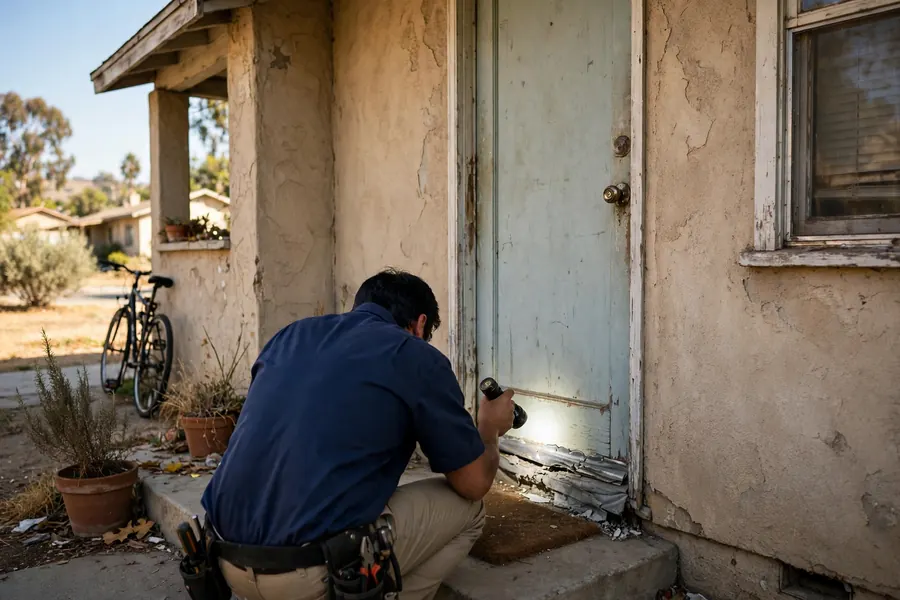
When nothing happens
What to Do When the Landlord Stalls
Direct answer: because a right you cannot enforce is just a sentence — here is the sequence, in order, and the limits that apply to each step.
-
Put it in writing
Notify the landlord in writing — email or text both work, but keep a copy. Describe the signs: droppings, noises, gnaw marks, where and when. Written notice starts the clock.
-
Give a reasonable time
The law presumes 30 days is a reasonable time to act, though a serious infestation can require faster action. Do not jump to remedies on day two.
-
Repair and deduct — with limits
Under Civil Code Section 1942, you can hire a licensed pest control company and deduct the cost from rent. Two hard limits: the cost cannot exceed one month’s rent, and you can only use this remedy twice in any 12-month period. If you hire a company yourself, our rodent exclusion cost guide shows what a proper quote should include.
-
Call code enforcement
The City of San Luis Obispo’s Code Enforcement team investigates building and housing violations on complaint. You can file a Field Investigation Request or call the Code Enforcement Hotline at (805) 594-8188.
-
Know your protection
Civil Code Section 1942.5 bars eviction, rent increases, or reduced services for 180 days after a good-faith habitability complaint. If the landlord retaliates, that is a separate violation.
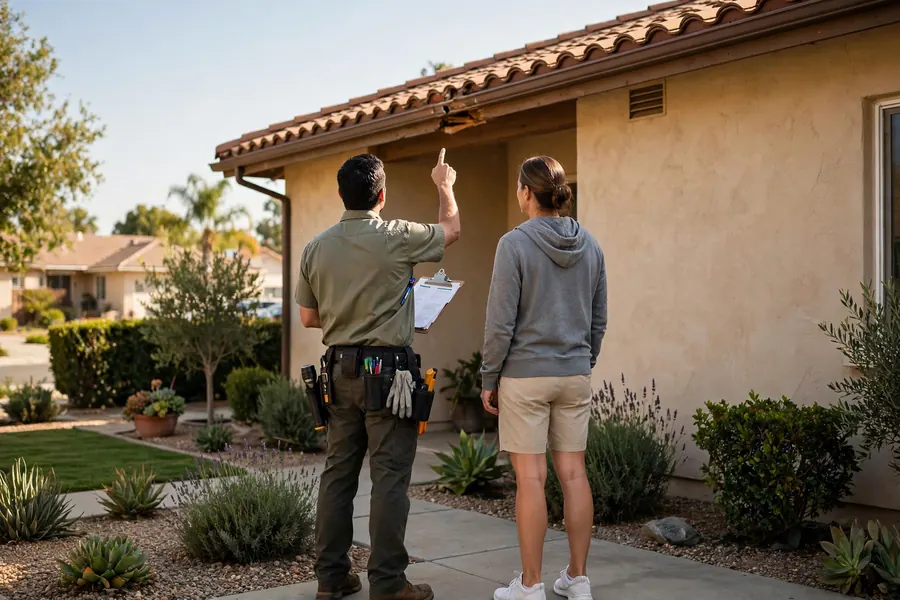
For owners
What Landlords Should Do Before It Becomes a Dispute
Direct answer: because a sealed building and a paper trail cost far less than a habitability complaint — and tenants notice the difference.
Inspect between tenants
Walk the unit at turnover: look for droppings, gnaw marks, and gaps around pipes and vents. Catching a problem between tenants is a repair; catching it after move-in is a dispute.
Seal the structure
Close every gap over 1/4 inch with steel wool, mesh, or sheet metal. Exclusion is the permanent half of rodent control — and it is the landlord’s side of the wall.
Keep a program, not a panic
A regular inspection and monitoring program catches pressure early. Our rodent control program is built for exactly this — scheduled checks, written findings, and no surprises.
Respond in writing, fast
A quick written response — "we have scheduled an inspection for Thursday" — defuses most disputes. Silence is what turns a rat problem into a legal problem.
Good to know
Rental Rodent Questions, Answered
The landlord's. A unit must be delivered with no rodents or vermin in it, and rats present at the start of a tenancy are the owner's responsibility to remove. Document what you found on move-in day, in writing, with photos.
Only in narrow cases — generally where your own actions caused the problem, for example by leaving food out or keeping the unit unsanitary. The landlord cannot shift the cost of a structural or pre-existing infestation onto you, and a lease cannot override habitability.
Not where it conflicts with habitability. California's warranty of habitability is non-waivable, so a lease clause that makes the tenant pay for rodent control the landlord is legally responsible for does not hold up. Your own cleanliness duties under the law still apply.
A reasonable time — and the law presumes 30 days is reasonable, though a serious infestation can require faster action. The clock starts when you give notice, so put it in writing and keep a copy.
Withholding rent is risky and the rules are strict. The safer, codified route is repair and deduct under Civil Code Section 1942: hire a licensed company and deduct the cost, capped at one month's rent and usable at most twice in 12 months. Talk to a qualified attorney or legal aid before withholding rent.
No. Civil Code Section 1942.5 protects tenants from eviction, rent hikes, or reduced services for 180 days after a good-faith habitability complaint. Keep records of your complaint and any response.
Yes, in part. If a tenant's actions caused or worsened the infestation — food left out, clutter, pet food, unsanitary housekeeping — the tenant can be held financially responsible for remediation. The landlord still has to fix the habitability problem first.
Rats in Your Rental? Start With a Written Report.
An inspection gives both sides the same facts: species, entries, and what it takes to fix it. Call now or book an inspection.
(805) 475-0516SLO Rodent Control — inspection-first rodent control in San Luis Obispo, CA.