Myth vs. evidence
Do Ultrasonic Rodent Repellers Work?
Short answer: no — not reliably, and not for long. UC IPM's verdict on ultrasonic and high-frequency repellents is blunt: rats acclimate to the sound, and there is little evidence that sound, magnetic, or vibrational devices of any kind will drive established house mice or rats from buildings. Here's why the idea sounds plausible, why it fails, and what actually works.
- UC IPM: rats acclimate to the sound
- No evidence they clear established rodents
- Trapping + exclusion: what works instead
The verdict
What the Research Actually Says
Direct answer: ultrasonic repellents don't work as rodent control. The University of California's Integrated Pest Management program — the state's authority on the subject — states there is little evidence that sound, magnetic, or vibrational devices of any kind will drive established house mice or rats from buildings, and that rats acclimate to the sound.
Rats acclimate
The core problem: rodents habituate. A sound that's briefly unpleasant becomes background noise within days — especially for roof rats, which UC IPM notes are strongly neophobic yet adaptable. The device keeps humming; the rats keep nesting.
Established vs. new
Even the most generous reading only covers deterring new exploration — not evicting an established population with nests, food stores, and young. A rat with babies in your attic isn't leaving over a buzzing plug-in.
Walls block the sound
Ultrasound doesn't penetrate walls, furniture, or insulation — the very places rodents nest. A device in the living room does nothing for the colony inside the wall void behind it.
No regulatory teeth
These devices aren't evaluated as pesticides, so their marketing claims face none of the testing real control products undergo. Impressive packaging, zero burden of proof.
Why it sells
Why the Idea Sounds So Plausible
Direct answer: because it's built on a grain of truth — rodents do hear higher frequencies than we do — wrapped in the oldest marketing trick in pest control: the effortless fix.
A grain of truth
Rodents hear into ultrasonic ranges, so a device emitting those frequencies seems logical. But hearing a sound and being driven out by it are completely different things — you can hear a neighbor's music without moving house.
The effortless promise
Plug it in and walk away: no traps to check, no entries to seal, no attic to enter. It sells because the real answer — inspection, trapping, exclusion — is work.
Cherry-picked testimonials
“Haven't seen a mouse since!” Often coincidence: seasonal movement, a neighbor's cat, or the population was never established. Without controlled comparison, anecdotes prove nothing.
The price feels safe
Twenty or thirty dollars feels like a cheap experiment. But a cheap experiment that fails for six months is six months of breeding — the most expensive kind of cheap.
Forty years of warnings
The FTC Has Been Saying This Since the 1980s
Direct answer: skepticism about ultrasonic repellers isn't new — federal regulators have been taking action against their marketing claims for four decades.
1985–1997: Six companies
The Federal Trade Commission brought enforcement actions against six different ultrasonic repeller companies over a twelve-year span, challenging claims that the devices could repel rodents.
2001: 60+ warning letters
The FTC sent warning letters to more than sixty manufacturers and marketers of ultrasonic pest control devices, putting the entire industry on notice about unsubstantiated claims.
2003: Trenton, Missouri
The FTC formally charged a Missouri company over its ultrasonic repeller claims — one of the most direct federal actions against a specific maker in the category's history.
Today: Same claims
Walk into any hardware store and the packaging still promises what the FTC was challenging in the Reagan era. The marketing outlasted the enforcement — the physics never changed.
The lab work
The Science: Habituation Kills the Idea
Direct answer: controlled studies find no significant reduction in rodent activity from ultrasonic devices — rodents habituate to the sound within days, and the devices physically can't reach where rodents live.
| Device type | What the marketing claims | What the evidence shows |
|---|---|---|
| Ultrasonic plug-ins | "Drives rodents out with high-frequency sound" | Fails. Meehan 1984 (Pest Management Science): no significant reduction in activity. Rodents habituate within days — the sound becomes background noise. |
| Electromagnetic / "whole-house" units | "Pulses through your wiring repel pests" | Fails. UC IPM groups these with ultrasonic devices: "High frequency electronic devices aren't effective." Not evaluated as pesticides, so claims face no testing requirement. |
| Vibrational / sonic stakes | "Shakes rodents out of walls and soil" | Fails. Same physics problem — sound and vibration attenuate through structure. Field reports document rodents nesting directly beside active units. |
| Snap trapping | "Kills rodents on contact" | Works. UC IPM: "the safest, most effective, and most economical way to trap rats." See our rat control and mice control pages for the method. |
| Exclusion | "Seals rodents out permanently" | Works. "Blocking the holes where they enter the house is by far the most effective control method." Our exclusion service closes every gap down to 1/4 inch. |
Effectiveness at a Glance
Illustrative comparison based on UC IPM guidance and published field results: repellers show no significant reduction (Meehan 1984); trapping + exclusion is the IPM gold standard. Percentages are relative effectiveness, not guarantees.
Local angle
Why SLO Homeowners Keep Buying These
Direct answer: San Luis Obispo's housing stock is practically designed to make ultrasonic repellers fail — old construction, wall voids, and attic-dwelling roof rats.
Old Victorians downtown
Downtown SLO's Victorians and early-1900s homes have balloon framing and generous wall voids — perfect rodent highways that no plug-in sound wave can penetrate. A device in the parlor does nothing for the colony running the walls.
Cal Poly rentals
Near campus, landlords and student tenants reach for the cheapest fix first. A $25 plug-in feels like action — but six months of breeding in a shared-wall rental turns a small problem into a building-wide one. See our student housing page.
Roof rats in attics
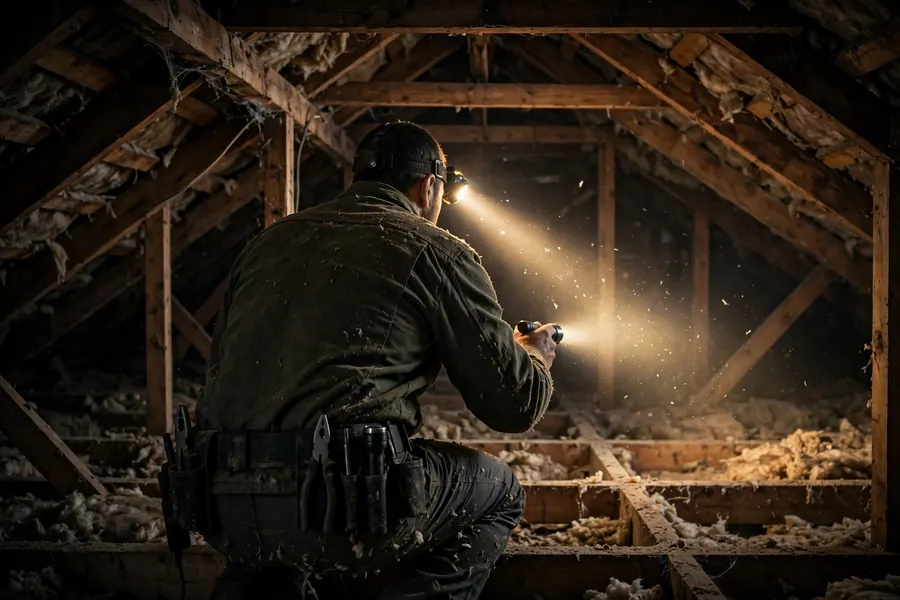
SLO's dominant rodent is the roof rat, and it nests in attics — above insulation, behind wood, exactly where ultrasound can't reach. An attic colony never hears the device in the bedroom below. Our rat nest vs mouse nest guide shows what you're actually dealing with up there.
The Higuera hardware aisle
They're on the shelf at every hardware store in town, packaged like technology. But a plug-in is not pest control any more than a nightlight is a security system — it changes how the room feels, not who lives in the walls. Real numbers: see what exclusion actually costs.
What works
What Actually Works Instead
Direct answer: the unglamorous trio UC IPM recommends — inspection, trapping, and exclusion. It costs more than a plug-in and works permanently, which is the trade that matters.
-
Inspect first
Find the species, the entries, and the nest zones. A mice-in-walls inspection or attic check tells you what you're actually fighting — the device skips this entirely. Here's what we tell people in SLO: those plug-ins don't move field rats. UC IPM's verdict is blunt — rats acclimate to the sound, and there's little evidence any of these devices drive established rodents out of a building. We've walked into plenty of attics with a repeller blinking away in the corner and fresh droppings right next to it.
-
Trap the population
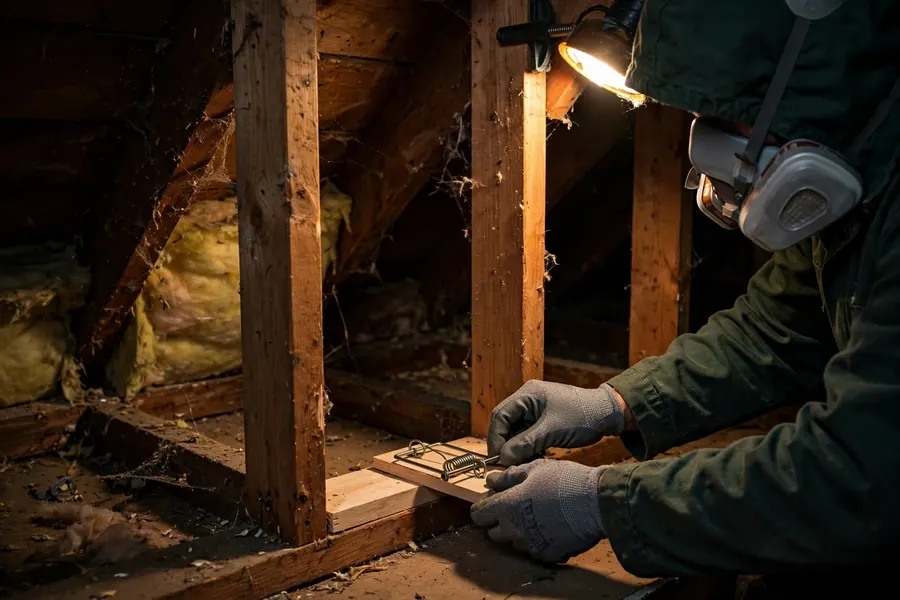
Snap traps: UC IPM calls them the safest, most effective, and most economical way to trap rats. Placed along walls within 10 feet of activity, in pairs — real removal, not hopeful buzzing.
-
Seal every entry
Every gap over 1/4 inch closed with steel wool, galvanized mesh, and flashing. Our rodent exclusion service is the permanent half of the job — nothing to repel when nothing can enter.
-
Monitor
A few traps left as monitors tell you about new pressure. Our rodent control program keeps that watch going year-round.
Good to know
Repeller Questions, Answered
UC IPM's finding covers house mice too: little evidence these devices drive established mice from buildings. Mice acclimate like rats do — the sound becomes background within days.
Price doesn't change the physics: ultrasound still doesn't penetrate walls or furniture, and rodents still habituate. A pricier device is a pricier placebo.
No — attics are exactly where these devices fail hardest. The sound doesn't reach through insulation and wood to the nest, and an established attic colony has zero reason to leave.
No repellent — ultrasonic, chemical, or otherwise — substitutes for trapping and exclusion in UC IPM's guidance. Sanitation plus sealed entries plus trapping is the complete answer; everything else is a supplement at best.
Yes. The FTC brought actions against six ultrasonic repeller companies between 1985 and 1997, sent warning letters to 60+ makers in 2001, and formally charged a Missouri manufacturer in 2003. The claims were challenged for decades — the packaging just outlasted the enforcement.
It's not harmful — just ineffective. The danger isn't the device, it's the delay: every month you trust the plug-in is a month the population breeds. Unplug it when you're ready to do the real work — sealing entries and trapping — or keep it as a very expensive nightlight.
Start with an inspection to identify the species and entries, then trap the population and seal every gap down to 1/4 inch. That's the UC IPM sequence — and it's exactly what our rat control service does. If you're in SLO, call (805) 475-0516.
Skip the Plug-In. Fix the Problem.
Inspection, trapping, and exclusion — the methods with actual evidence behind them. Call now or book an inspection.
(805) 475-0516SLO Rodent Control — inspection-first rodent control in San Luis Obispo, CA.